Wednesday, 16 November 2022

A Dream of Sadler’s Wells, Lorna Hill

We meet Veronica on a train taking her away from her beloved London to live with relatives she barely knows in Northumberland. Her mood is dark and she compares the north of England unfavourably to her home city. When she meets a curious boy while escaping an increasingly smoke filled carriage she reveals that her father has recently died, as well as her secret dream of becoming a ballerina. The boy shares his own secret aspirations with her and they pass the rest of the journey in relative peace. On arriving with her family it soon becomes clear that they don’t have much in common - Veronica rushes to help the chauffeur and can’t understand why this is forbidden. Her cousin Caroline is friendly but Fiona is unpleasant throughout, jealous of Veronica’s toned body and talent. Veronica is dedicated to her art and practices diligently in secret until she is given a glimmer of opportunity, her aunt agreeing to her training as a dance teacher. Will she be able to persuade her society family that dancing is not to be looked down upon and achieve her dream of joining the Sadler’s Wells School of Ballet?

This is a cosy, innocent read with many a picnic and pony ride and the only peril being Fiona’s sharp tongue and the possibility of a missed train. They live a privileged life, and although this can be constraining, ultimately their voices are listened to far more than many would have been. Veronica’s ‘sort-of a cousin’ Sebastian is kind and understanding of her dreams. He is also the only person that can put Fiona in her place. Reading this felt very reminiscent of books like The Railway Children or The Famous Five where many a simple adventure is had, idyllic days are spent exploring, and small battles are fought with adults. 


As Veronica is not yet a student at Sadler’s Wells the focus is less on ballet than I imagine the rest of the series might be, but there is still plenty to keep fans interested. Hill shows both the glamorous, elegant side of performance with the beautiful costumes and union with music, but also the daily grind of attaining the skill to create such moving displays. Veronica has a deep appreciation for the art and finds herself lost in the music and surrounds, performing above and beyond anything she has attained previously. She is also lucky to have supportive adults around her. Her beloved Madame back in London and her new teacher Miss Martin go out of their way to support her in achieving her dreams, an indication of the talent they see in her.


Despite Veronica’s reservations when first arriving in her new home, she comes to appreciate the landscape and enjoys summer days spent with her cousins and Sebastian. Nonetheless, she offers us plenty of glimpses of her life in London and we get a good sense of the characters she knew there. Mrs Crapper, her landlady, and the artist Jonathan who lived above them and encouraged her creativity to flourish. She reflects on the shift from leaving London and feeling as though she were losing her home and returning and feeling still that she is leaving home. Her feelings are conflicted and realistic as she grows into her new life.


This is a delightful read with amusing misunderstandings and all the joy of the freedom of youth. Veronica is an amusing narrator, brutally honest in some of her opinions, but ultimately kind and hardworking. The writing is richly descriptive and absorbing. The perfect cosy read for the colder months.

Wednesday, 14 September 2022

The Shadow of the Wind, Carlos Ruiz Zafón (translated by Lucia Graves)

This post contains affiliate links. If you click through and buy I will receive a percentage commission at no extra cost to you.

Daniel Sempere is ten years old when his father takes him to the Cemetery of Forgotten Books and instructs him to choose one book which will become his responsibility to keep safe. He chooses The Shadow of the Wind by Julián Carax, an author whose novels have all but disappeared. In this first beguiling chapter, which reads something like a love letter to literature, neither Daniel nor the reader are aware of how much his book choice will change his life. 

Having devoured the novel, Daniel goes in search of more of Carax’s work, only to be met with disappointment. He is offered large sums of money to part with the book but he refuses. Soon, he encounters a mysterious figure named after a character from the book, hellbent on finding all copies of Carax’s work and destroying them. Daniel finds himself engulfed in a world of mystery, heartache, and revenge, as he seeks to uncover the truth about Carax.

Alongside the mystery and intrigue is a coming-of-age tale of love. Daniel falls for his best friend’s sister, much to the anger of her family. His story mirrors Julián’s own troubled love story in unsettling ways, and the reader is torn up hoping for a less tragic outcome. As Daniel gradually discovers the truth of Julián’s life, he realises that he must learn lessons from the past and try to avoid the kind of fallout experienced by the previous generation. His family friend, Fermín, aids him in his search for the truth, but his association with him further leads Daniel into danger. Inspector Fumero is looking for him and is willing to punish anyone with an association, and, as it turns out, also has a vendetta against Julián, putting Daniel in double danger.

This is a curious book that stirs up a lot of emotion. The parallel trajectory of Julián and Daniel’s lives seems a little overdone, and it is Julián’s tale that you really long to know the conclusion to, but overall it is gripping. There’s an interesting host of characters, all seemingly with secret pasts, and Daniel is never quite sure who to believe. There is much honour to be found in the actions of a number of characters, and much shame in others. Father figures, especially those with daughters, do not come off well as a whole, treating their families with violence and causing huge amounts of grief. Daniel’s father is the exception to his, quietly supporting his son while worrying as he becomes increasingly distracted and unreliable. There are some truly harrowing tales within the unravelling of Julián’s sad story, and most often it is young women who are the victims.

There are notes of other great tales mixed in - Fumero is a kind of Javert, obsessed with an individual to an unhealthy degree. Lain Coubert, the mysterious arsonist, has parallels to the Phantom of the Opera - a disfigured face, living in the shadows, and carrying out abhorrent deeds while somehow maintaining a certain level of sympathy from the reader, at least as the novel progresses. 

Set between 1945 and 1955 (in Daniel’s timeline), there are shadows of the real-life upheaval and atrocities that were carried out in Barcelona, adding motive and a sense of history and context to the novel. Zafón does not shy away from the darker side of life, and his characters reflect this, all fallible and making unwise decisions at times. He nonetheless infuses the novel with a sense of humour which helps prevent it becoming too heavy.

Overall, a wonderful read that fits in an awful lot of life. There are mysteries and revelations aplenty, and characters that you become quite attached to. A great pick for anyone looking for a well-written page turner and a spot of armchair travel. 

Pick up a copy:
Bookshop
Waterstones

Wednesday, 24 August 2022

A Corruption of Blood, Ambrose Parry

This post is part of the blog tour for the novel. Thank you to Random Things Tours and Canongate for providing me with a copy in exchange for an honest review.

Dr Raven and Sarah Fisher are back and investigating the mysterious death of a baby, washed up  on the shore of the Leith with a length of white thread round its neck. Not long after witnessing this upsetting sight Raven receives the news that another acquaintance has been found dead and that the son is the prime suspect. New love for Raven forces him deeper into the mystery as he searches for an answer that might set an old adversary free.


For the most part the mysteries seem almost secondary to Raven’s complicated love life, Sarah’s crushed ambitions, and commentary on the poor position of women in Victorian Edinburgh and the ways in which they are taken advantage of. In the final handful of chapters as the truth is slowly revealed in a series of twists and revelations you are drawn into the drama however and gripped in anticipation of the next bombshell.


The position of women in society takes a central role, with Sarah battling her competing desires for love and career. She is intelligent and accomplished but constantly ignored and belittled by men unable to imagine that a woman would have any useful insight. Her confidence has been knocked in her travels to meet Dr. Blackwell, the first registered female doctor, and she questions if she should ever have hoped for a future of medical pursuit. The need to help solve the mysteries and help her friends draws her back into the world which ultimately makes her life feel fulfilled. We are reminded of the importance of marriage in a woman’s opportunities. As a widow Sarah has more status and financial freedom than she had previously, but does she have the will to resist future marriage in order to retain some of that independence? Her former life as a maid both helps and hinders her. She is able to relate to those in need, but those who know her past are often inclined to let it colour their vision of her.


Women are shown to be vulnerable, whether through the contagious diseases legislation based on the infamous real-life Contagious Diseases Act, at risk of assault in their homes and workplaces, and at the mercy of society’s view of them. It is all too easy to be forced into prostitution and to suffer the associated judgment. At the heart of the novel is an abuse of vulnerable women, and those who seek to gain from their misfortune. It is a sad tale and one that won’t have a happy ending for many.


I haven’t read the previous two novels in the series but did not feel at a loss because of it, although it’s clear that much has been missed in the relationships presented, which can largely be intuited. The book wasn’t as atmospheric as I’d perhaps expected from reviews of the first two but it was nonetheless an interesting read. The medical detail and focus on the very real issues that haunted those alive at the time make this a moving read. A slow burn but ultimately worth the time.

Friday, 22 July 2022

Little Dancer, Melanie Laschallas

Paris, 1878. Ballet dancer Marie van Goethem is chosen by the unknown artist Edgar Degas to model for his new sculpture: Little Dancer, Aged Fourteen Years.

But Marie is much more than she seems. By day she’s a ‘little rat’ of the opera, contorting her starving body to entertain the bourgeoisie. By night she’s plotting to overthrow the government and reinstate the Paris Commune, to keep a promise she made to her father, a leading communard who died in the street massacres of 1871.

As Marie watches the troubling sculpture of herself come to life in Degas’ hands, she falls further into the intoxicating world of bohemian, Impressionist Paris, a world at odds with the socialist principles she has vowed to uphold.

With the fifth Impressionist Exhibition looming, a devastating family secret is uncovered which changes everything for both Marie and Degas.

As Degas struggles to finish his sculpture and the police close in on Marie, she must decide where her loyalties lie and act to save herself, her family and the Little Dancer.

This is a fascinating, absorbing book that takes you into the struggles of many Parisians in the late nineteenth century. Marie's life is hard, and her love of the part of Les Miserables that she managed to get her hands on is a constant reminder that the lives of the poor was an issue that was hard to ignore at the time. Her time at the Paris Opera is thankless and relentless, and although nervous of Degas to begin with, she finds the time in his studio becomes a safe haven. Heartbreak over her father's fate runs through the novel alongside the struggle it brought upon her remaining family, who act like he never existed. Marie desperately wants to keep his spirit alive but at what cost? As life becomes increasingly desperate and the move toward a more violent course of action becomes more prominent, she must decide how far she is willing to go.

Marie van Goethem was the real-life model for Degas' famous Little Dancer of Fourteen Years. Her story ended without a trace. Leschallas brings her back to life in this evocative novel which doesn't hide from the gritty reality of life for those struggling to get by. 


Tuesday, 19 July 2022

Hotbed: Bohemian New York and the Secret Club That Sparked Modern Feminism, Joanna Scutts

This post contains affiliate links. If you click through and buy I will receive a percentage commission at no extra cost to you.

This post is part of the blog tour for the book. Thank you to Duckworth Books and Random Things Tours for providing me with a copy of the book in exchange for an honest review.

In the early 1900s a group of women began meeting weekly to discuss feminism and its intersection with political and social issues of the day. The women were largely well educated and financially comfortable, and the group became known as Heterodoxy. They were aware of the narrowness of their diversity but this didn’t always mean they avoided falling in to common prejudices. There was, at times, a disconnect between understanding that what they saw as rebellion and independence wasn’t viable or desirable for women in other situations. For example, some rejected marriage, but for many in less privileged positions marriage was essential for being seen as respectable or to move away from unpleasant stereotypes. Nonetheless, they endeavoured to help in situations far removed from their own, and although sometimes there were clashes, it was clear that they had a certain amount of protection from the law that working class women and women of colour did not have, and that this could be used to the advantage of all.

Hotbed discusses the huge range of topics that Heterodoxy were interested in, from same sex relationships to workers’ rights, psychoanalysis, theatre, and the right to birth control. Many of the issues will seem uncomfortably familiar to many a modern reader. This is particularly evident in the uneven opportunities afforded to different groups, and to the difficult balance of motherhood and a fulfilling work life. The Feminist Alliance proposed a dedicated apartment complex for families where cooking, cleaning, and childcare were organised communally and undertaken by professionals. The idea was appealing to many but it soon became clear that the costs of such an endeavour were well beyond the reach of the average family. There was also pushback from external parties who believed entrusting the raising of children to professionals showed a lack of concern for the wellbeing of the child. Charlotte Perkins Gilman was adamant that many parents were not good at raising their children and that women did not have an inherent knowledge of what was best. She believed that society was failing children by leaving their upbringing to the chance of birth. The apartment complex idea was eventually scrapped due to internal disagreements, spiralling costs, and the outbreak of War in Europe. Members continued to work hard to support mothers who wished to, or indeed needed to, keep working, and eventually made some progress whereby women were to take two years (unpaid) leave. It was far from ideal, but the presence of a policy indicated that mothers belonged in the workplace, a novel idea.

The group supported the movement that grew around the Triangle Fire tragedy, whereby 146 factory workers died in a fire, the doors to escape routes locked, and internal conditions a perfect storm for the quick spread of fire. It was a horrifying tragedy that shook the population of New York. Sadly, the new factory that they moved in to afterward showed no more concern for employees’ wellbeing. At times efforts to highlight poor conditions could be thought to be in poor taste with pageants recreating the appalling positions many found themselves in, turning it into a spectacle. There was some resentment between the workers and the glamorous, wealthy activists who took up all the limelight, but they did help to mobilise and publicise issues.

Hotbed portrays a creative, intelligent group, determined to bring about change and experiment with different ways of living. Scutts doesn’t shy away from the in-fighting and contradictions however. We see how open relationships caused great strain on many members, how the sheer volume of interests involved could sometimes hamper progress, and the dismissal and condescension shown to those from different backgrounds. For women who were apparently so enlightened it can be hard to reconcile such blindness to other issues. This is a fascinating read that sheds light on many aspects of early twentieth century life and demonstrates how inequality permeated all aspects of society. 

Pick up a copy:
Bookshop
Waterstones


Tuesday, 5 July 2022

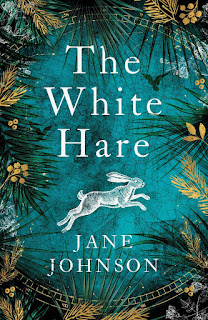
The White Hare, Jane Johnson

This post contains affiliate links. If you click through and buy I will receive a percentage commission at no extra cost to you.

This post is part of the blog tour for the book. Thanks to Random Things Tours and Head of Zeus for providing me with a free copy of the book in exchange for an honest review.

It’s 1954 and Magda, Mila, and Janey Prusik are on their way to White Cove, their new home and future guest house. Originally from Poland, Magda and Mila moved to England during World War Two. A disastrous end to a relationship, the cause of which is only hinted at for large sections of the book, forced them out of London and to Cornwall to start a new life. It is isolated but beautiful and is full of promise in Magda’s eyes. Mila is less certain that she wants to be shut away from the world with her unloving, demanding mother, wishing she could be back with her husband. It soon becomes clear that there’s a lot of local legend that causes fear of the house, and many try to dissuade them from staying and trying to make their home hospitable. 

We are told the tale from Mila’s perspective, but it is her five year old daughter Janey, alongside her toy rabbit, that steal the show. Janey seems connected to the history of the property, of the mysterious lady so many make reference to. Rabbit also takes on new powers, communicating to Janey secrets that she wouldn’t have had any knowledge of otherwise. Mila is disconcerted when Janey begins drawing the same symbol over and over, that is also mysteriously scratched into her bedroom wall, and near the graveyard in Eglosberyan. What supernatural forces might be acting upon her daughter? The workmen they enlist to help with the renovations have accidents and are reluctant to continue work on the property. With so much superstition surrounding the place and the constant turning up of strange objects and notes, Mila begins to wonder if there is something to the legends. 

Aside from the supernatural elements, there is a strong focus on familial relationships. Magda is overbearing and seems unhappy with everything Mila does. She orders her around and terrorises the two of them when she loses her temper. The close contact that is forced upon them causes Mila to begin to dwell on her childhood, with distressing memories coming to the fore which leads their already strained relationship to falter still further. Their cold relationship is in stark contrast to that between Mila and Janey. Although living within the confines of Magda’s demands, we see a lot of love and affection between the two. Mila seems to have a much better understanding of how to nurture a child than her own mother, and she is kind and generous with her. Cowed under a domineering mother, her desire to protect Janey overrides any sense of duty. 

The local community are very present in the book. Jack Lord, a kindly but mysterious man, appears early on and forms an affinity with Janey. He is helpful but closed off, seemingly full of secret knowledge. Keziah and Ariadne, a local healer and artist, welcome them warmly, supplying cures and edible treats, but leaving Mila with a sense of unease at their unconventional lifestyle and belief in the supernatural. Casworan Martin, the local vicar, although outwardly friendly leaves her with a sense of discomfort, and when he manoeuvres himself into performing an exorcism on the house she reaches the end of her politeness. The Prusiks are positioned as outsiders, with local residents assuming they will be a certain type of Londoner without any respect for the land and customs. 

The opening of the novel is gripping and disturbing, and there’s a generally unsettling mood that hangs over it for the duration, but it doesn’t always grab your attention fully. Some of the mysteries feel easy to unpick, although far from all. The story passes at a gentle pace before ramping up in the final sections with loose ends tied together. Johnson describes the locations in vivid detail so you feel connected to the land. An intriguing novel that explores themes of family, the damage secrets can inflict, and the power of history.

Pick up a copy:
Bookshop
Waterstones


Thursday, 30 June 2022

The Draw of the Sea, Wyl Menmuir

This post contains affiliate links. If you click through and buy I will receive a percentage commission at no extra cost to you.

This post is part of the blog tour for the book. Thanks to Random Things Tours and Aurum Press for providing me with a free copy of the book in exchange for an honest review.

In this meditative memoir Menmuir explores the appeal of the sea, its danger and healing powers. In short chapters he meets an eclectic host of characters, from those who spend hours searching beaches for washed up treasure to photographers, surfers, amateur marine biologists, and free divers. His focus is largely on the coast of Cornwall and the Isles of Scilly but he also ventures as far as Svalbard. For many the sea provides a sense of peace, but its danger is never far from mind, nor the struggles of those trying to make their home in small coastal communities.

Menmuir enthusiastically (and occasionally tentatively) throws himself into the pursuits of those he meets. Beachcombing (or wrecking, as it’s known in Cornwall) becomes an absorbing pastime, but he comments on the conflict between the joy he feels at finding small pieces of plastic toys and the guilt at taking more pleasure in them than his natural finds. He is all too aware of the damage human activity is wreaking on the natural world. He meets a lobster fisherman, Jof Hicks, who goes about his work consciously and sustainably, handcrafting the lobster pots and fishing only in small quantities. When questioned on whether it’s worth the time he replies that it’s good exercise, peaceful, and time that millions of others fritter away staring at screens.

He introduces us city-dwellers to a different way of life, where families head straight to the beach for some surf time after school and where your plumber might vanish for weeks in the middle of a job on getting wind of some irresistible waves. Threats to the way of life are also highlighted with communities decimated in a wave of second homes that remain empty for the majority of the year. This, and other factors such as the profitability of short-term lets, means that many locals are being priced out of the areas they were born.

Despite the challenges and conflicts of coastal life it’s also clear that the connection to the water can be hugely beneficial for mental health. The peace and exhilaration of free-diving and the integral focus on controlling your breath turns it into an almost meditative exercise. I was also absolutely fascinated to learn about the mammalian dive reflex which allows humans to hold their breath for much longer under water than they would above the surface.

In the early days of the Covid pandemic photographers Mike Guest and Nick Pumphrey began the Dawn Days of May project, in which they took a wetsuit and camera into the sea at dawn every day of the month. It quickly became clear how grounding and calming the experience was. Enthralled by the changing nature of the waterscape and the beauty of the dawn, the project garnered a following on Instagram and inspired others to set out on similar adventures.

This is a fascinating, varied book that gives an insight into many lives and the central role the sea plays in them. You are able to easily dip in and out, never knowing quite what you’ll find in the next chapter. It certainly made me want to spend more time exploring our coastline. Special mention should also be given to the Holly Ovenden, designer of the physical book, for its entrancingly beautiful cover and endpapers that will give you a little taste of the sea wherever you’re reading.

Pick up a copy:
Bookshop
Waterstones