Showing posts with label Mystery. Show all posts

Wednesday, 14 September 2022

The Shadow of the Wind, Carlos Ruiz Zafón (translated by Lucia Graves)

This post contains affiliate links. If you click through and buy I will receive a percentage commission at no extra cost to you.

Daniel Sempere is ten years old when his father takes him to the Cemetery of Forgotten Books and instructs him to choose one book which will become his responsibility to keep safe. He chooses The Shadow of the Wind by Julián Carax, an author whose novels have all but disappeared. In this first beguiling chapter, which reads something like a love letter to literature, neither Daniel nor the reader are aware of how much his book choice will change his life. 

Having devoured the novel, Daniel goes in search of more of Carax’s work, only to be met with disappointment. He is offered large sums of money to part with the book but he refuses. Soon, he encounters a mysterious figure named after a character from the book, hellbent on finding all copies of Carax’s work and destroying them. Daniel finds himself engulfed in a world of mystery, heartache, and revenge, as he seeks to uncover the truth about Carax.

Alongside the mystery and intrigue is a coming-of-age tale of love. Daniel falls for his best friend’s sister, much to the anger of her family. His story mirrors Julián’s own troubled love story in unsettling ways, and the reader is torn up hoping for a less tragic outcome. As Daniel gradually discovers the truth of Julián’s life, he realises that he must learn lessons from the past and try to avoid the kind of fallout experienced by the previous generation. His family friend, Fermín, aids him in his search for the truth, but his association with him further leads Daniel into danger. Inspector Fumero is looking for him and is willing to punish anyone with an association, and, as it turns out, also has a vendetta against Julián, putting Daniel in double danger.

This is a curious book that stirs up a lot of emotion. The parallel trajectory of Julián and Daniel’s lives seems a little overdone, and it is Julián’s tale that you really long to know the conclusion to, but overall it is gripping. There’s an interesting host of characters, all seemingly with secret pasts, and Daniel is never quite sure who to believe. There is much honour to be found in the actions of a number of characters, and much shame in others. Father figures, especially those with daughters, do not come off well as a whole, treating their families with violence and causing huge amounts of grief. Daniel’s father is the exception to his, quietly supporting his son while worrying as he becomes increasingly distracted and unreliable. There are some truly harrowing tales within the unravelling of Julián’s sad story, and most often it is young women who are the victims.

There are notes of other great tales mixed in - Fumero is a kind of Javert, obsessed with an individual to an unhealthy degree. Lain Coubert, the mysterious arsonist, has parallels to the Phantom of the Opera - a disfigured face, living in the shadows, and carrying out abhorrent deeds while somehow maintaining a certain level of sympathy from the reader, at least as the novel progresses. 

Set between 1945 and 1955 (in Daniel’s timeline), there are shadows of the real-life upheaval and atrocities that were carried out in Barcelona, adding motive and a sense of history and context to the novel. Zafón does not shy away from the darker side of life, and his characters reflect this, all fallible and making unwise decisions at times. He nonetheless infuses the novel with a sense of humour which helps prevent it becoming too heavy.

Overall, a wonderful read that fits in an awful lot of life. There are mysteries and revelations aplenty, and characters that you become quite attached to. A great pick for anyone looking for a well-written page turner and a spot of armchair travel. 

Pick up a copy:
Bookshop
Waterstones

Wednesday, 11 May 2022

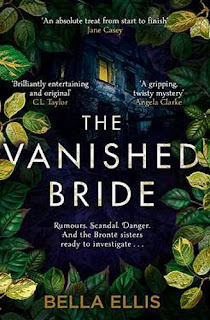
The Vanished Bride, Bella Ellis

This post contains affiliate links. If you click through and buy I will receive a percentage commission at no extra cost to you.

Elizabeth Chester has vanished in mysterious circumstances. Without disturbing anyone in the night she appears to have been the victim of a gruesome crime. Matilda French, the Chesters’ governess, is an old friend of the Brontë sisters and has the misfortune of being the one to discover Elizabeth’s room covered in blood but with no sign of a body or forced entry. Mr. Chester is not keen on an investigation, and with the over-zealous housekeeper Mrs. Crawley thoroughly scrubbing the room clean shortly after discovery, there’s not an awful lot of leads. The Brontë sisters, looking for some adventure and anxious that the disappearance of a woman should not go unnoticed, step up to do some detecting.

The story unfolds with a few red herrings and some incredibly dark character development, but I was never really swayed from my initial conviction. I’m usually fooled by every wrong turn an author lays out so it felt as though the truth was only thinly concealed, although I admit there were some details I didn’t see coming. As a mystery I’m not sure it would satisfy a more seasoned reader of the genre.

The characters are really the main heart of the novel. The Brontës, of course, but the side characters also contain a wealth of interest with complex motives and conflicting emotions. The Brontës feel like a realistic family with bickering and teasing commonplace. They seem occasionally to be a tad one-dimensional with very clear roles to play that they don’t often diverge from.

There are a lot of nods to events and characters from their novels, as well as real-life locations associated with them. I’m unusual in not particularly enjoying easter eggs in my books and films, but I’m sure for readers who do enjoy such things this book will utterly delight. Ellis draws on many well-known events and circumstances for the Brontë enthusiast but there are also many that could easily be missed. This is obviously an author who knows the Brontë story well and does something new with it.

Branwell’s presence is a worry to the sisters as they hope to help him out of his downward spiral. They’re all too aware of the limitations of their gender and his inclusion in some of their activities serves in both giving them a veneer of authority and keeping him away from the pub. There are some sweet moments in which he is loveably hopeless, yet they remind us that it is the women who have done the hard work.

Gender roles are central both to the plot and the general feel of the novel. The sisters are consistently frustrated by the limitations placed on them as women and the need to pretend they are working for men to have people take them seriously. Anne is still smarting from having lost her role as governess due to Branwell’s antics, yet we also see what a difficult, often unenviable life it is. Elizabeth Chester was not much better off - married to a man who would increase her material wealth but not make her happy. This seems to be the two unhappy options for women, and the Brontës are outliers who are aware of the precarity of their situation. They nonetheless focus their investigations on men, missing potential clues. The darker side of this is of course the awareness of the prevalence of male violence and the often helpless situations women find themselves in.

There are some quite gothic moments in the novel, and as you might imagine, Ellis often centres them around Emily. With mysterious signs of the first Mrs. Chester in the attic, some genuinely disturbing scenes involving a human skull, and hints at the other-worldly, there are definitely some hair-raising moments. Chester Grange itself is quite the gothic construction with its hidden passageways and secrets.

This is an easy read with a fun premise. The three sisters complement each other nicely to form a successful team of detectors. For fans of cosy crime and the Brontës this is a great choice.

Wednesday, 16 March 2022

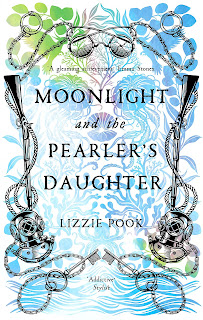
Moonlight and the Pearler’s Daughter, Lizzie Pook

This post contains affiliate links. If you click through and buy I will receive a percentage commission at no extra cost to you.

This post is part of the blog tour for the book. Thank you to Mantle and Random Things Tours for providing me with a copy of the book in exchange for an honest review.

The year is 1886 and the Brightwell family arrive in Bannin Bay, Western Australia, from England. Eliza remarks on the harshness of the land and how very different it is to anything she’s ever experienced before. Her father becomes a successful pearler and the family financially secure. Ten years later however, and we meet Eliza again, alone and waiting for her father to return from an expedition. Instead, she receives news of his disappearance. Before long Balarri, a local Aboriginal man, is arrested for his murder and the police are keen to close the case. Eliza is convinced they are wrong, both about her father being dead, and about Balarri being involved in his disappearance. She is determined to find the truth, and hopes desperately to be reunited with her father. 

The action moves along swiftly in the novel, hooking you in early on. So much happens in the book - tales of grief, shipwreck, drug addiction, and elicit affairs, and yet somehow they pass over you without any lasting effect. The moment of revelation or peril at times captures your heart yet the story moves on at such a pace that there’s no time to absorb what you’ve just read before the next misadventure is in full swing. Many readers might enjoy this fast pace but for me it left me feeling detached from the action and made it a book that was easy to put down. 

The writing, however, is beautifully constructed, with vivid descriptions of the landscape that make you feel as though you’re there. Pook is certainly a fan of similes and at times they feel a little repetitive, but there are also many moments of searing reality in her descriptive choices. 

Pook discusses many topics including the role of women, especially one alone in a dangerous place at a time when women were restricted by their gender. Eliza is headstrong and courageous to a fault, but she reluctantly admits that she needs a male companion to allow her access to certain areas. Axel is a willing companion, and although his presence may be necessary it is Eliza who leads the way and makes some reckless, dangerous decisions. Along the way she meets other women making their own way, at times attempting to live the life of a man. Again, this is passed over so quickly that it barely felt worth including. Alongside the struggles of women is the even more dangerous position of the Aboriginal people. We see from an early stage in the book how they are mistreated and considered guilty without any evidence. Later in Eliza’s travels she witnesses even more so the mistreatment of the original inhabitants of the land and it makes her reflect on her own position there, on the land her family’s bungalow sits on.

Another major theme throughout is family and grief. Eliza has suffered many losses in her young life, and the further disintegration that threatens her family throughout is almost too much to bear. There are moments of real trauma in the flashbacks to the loss of her mother, of the grief of her father and how Eliza experienced the events as a child. This helps to explain her determination to find her father, her need to see for herself what has happened to him. 

This is an interesting, if sometimes predictable read. It feels at times like it’s working to a formula with very familiar story arcs. The conclusion was a surprise, but the characters involved hadn’t made enough of an impression earlier to leave much of an emotional blow. There are short passages interspersed throughout the main text of Brightwell’s diary and an account of someone on the run that keep you guessing how they’re going to interact with the main plot. If you enjoy a mystery with a strong female lead and a brilliant sense of place then this is the book for you.

Pick up a copy:
Bookshop
Foyles
Waterstones


Wednesday, 6 January 2021

The Devil and the Dark Water, Stuart Turton

This post contains affiliate links. If you click through and buy I will receive a percentage commission at no extra cost to you.

It’s 1634 and the Saardam is setting off from Batavia on its long journey to Amsterdam. Aboard are the governor general, Jan Haan, hoping to be admitted into the Gentlemen 17 on arrival, his family and mistress, a renowned detective, Samuel Pipps, boarding in chains for a crime unknown to most onboard, including his loyal assistant, Arent Hayes. There’s crew and treasure aplenty aboard the ship, and when things start going wrong, everyone seems to have motive. A demon known as Old Tom whispers to the passengers, tempting them to commit murder. Trapped in the confines of the ship, the tension grows rapidly as the sign of Old Tom spreads and seemingly impossible events unfold.

The opening is dramatic - a leper at the dock warns passengers that the ship is cursed before apparently self-combusting. On closer examination it’s noted that his tongue had been cut out and an injury to his leg means he would not have been able to position himself where he made the announcement. This is a brief taste of the type of mysteries ahead, and gets you hooked right away.

There are moments where the pace lags, and the vast array of characters can take a while to orient yourself with, but the subplots keep you interested. Sara, Jan Haan’s wife, is on surprisingly good terms with his mistress. She despises her cruel husband and is surprised to discover others have experienced a softer side in years past. Their daughter Lia is in possession of a brilliant mind but is forced to conceal her intelligence as it is not seen as fitting for her sex. In Batavia she was kept separate from the outside world and hates her father for the abuse he inflicts on Sara.

Arent seems to have a good heart, but he also has the mark of Old Tom on his wrist, a mark he received in childhood during a curious incident he doesn’t fully remember. There is a constant sense of mistrust, but Turton writes the characters in a way that draws you in to some of them, instinctively feeling that they can’t be malicious. Others, however, maintain a sense of mystery.

The second half of the book is where the action really ramps up with the smaller mysteries revealed and the peril to those onboard rising with every page. When the final reveal arrives it feels a little rushed, giving us a sense of the disorientation that the characters would feel as their accepted reality changes in a few short moments. The truth is complex and I definitely didn’t see it coming, yet was left feeling as though something were missing, that there had been a slight misstep with the characters we felt we knew acting in ways that didn’t feel quite true to them.

This is an interesting read, playing with the idea of superstition, guilt, and suspicion. Despite its historical setting, Turton is upfront about the fact historical accuracy comes second to plot, and the book is none the weaker for it. He creates a claustrophobic, intense atmosphere that has the overall feeling of a different time. The characters’ background stories and motivation make them intriguing players in a novel that defies definition.

Pick up a copy:
Bookshop
Foyles
Waterstones

Friday, 6 November 2020

Second Cousin, Once Removed, Kenneth L. Toppell

This post is part of the Ultimate Blog Tour for the novel. Thank you to the author and The Write Reads for providing me with a copy of the book in exchange for an honest review.

Henry Atkinson is an ageing attorney who has taken up genealogy to fill the gap left by his now separated family. To his surprise, he discovers a professional hitman in his family tree, and when he makes contact becomes convinced he is responsible for the death of his uncle Ira. When a woman, Carolyn, turns up from his uncle’s business he is certain his life is in danger. What follows is a race across states both running from, and searching for, his cousin Shelley.


The premise is a tad unusual and you find yourself wondering why the characters are acting as they are. They seem to very easily adapt to life on the road, discarding their true identities, and predictably, falling in love with the person they’re pretending to be married to. The search for Shelley and the twist that makes them re-assess their morals are not particularly engaging. There are attempts to build suspense and mystery with repeated mentions of an incident that happened long ago, but it doesn’t quite hit the mark. The reveal is also fairly inconsequential and largely a device to progress an already convoluted plot.


The characters don’t have a lot of depth - Henry develops a lack of self-confidence for a while and Shelley apparently only accepts jobs where the target is not a good guy, but there’s little in the way of real development. Carolyn is quite an outdated portrayal of a female character. There’s a lot of descriptions of her physical appearance that will make you cringe and she’s often demure and subservient. Despite some blatant gender stereotyping, Toppell does at least give Carolyn and Marian, the only two female characters, an active role in the denouement.


Each chapter is narrated by either Henry, Carolyn, or Shelley. For the most part they pick up where the previous chapter left off, but there is occasional overlap to show scenarios from multiple points of view. The first chapter from Shelley’s perspective is one of the more exciting moments in the book as up until then he is shrouded in mystery and conjecture. 


Overall, not to my taste, but if you enjoy dialogue-heavy writing and exploring the mindset of a professional killer, you might enjoy it more than I did.

Tuesday, 29 September 2020

The Inheritance Games, Jennifer Lynn Barnes

This post contains affiliate links. If you click through and buy I will receive a percentage commission at no extra cost to you.

This post is part of the Ultimate Blog Tour for the novel. Thank you to Penguin and The Write Reads for providing me with a copy of the book in exchange for an honest review.

Avery Grambs has her life turned upside down when multi-billionaire Tobias Hawthorne, who she has no recollection of ever having met, leaves her his fortune. The inheritance comes with one condition - she has to live at Hawthorne House with his family for one year. This might sound like a simple enough task, but she is less than welcome as the usurper of their inheritance. What follows is a race to discover why Tobias chose Avery as his heir, with plenty of twists, turns, and assassination attempts along the way.

Avery is depicted as intelligent and kind from the start. Life hasn’t dealt her the easiest of hands but she works hard and looks out for those less fortunate than herself. The Hawthornes, by contrast, have become accustomed to a life of luxury and have their share of dark secrets haunting them. Tobias’ four grandsons are exceptional, quirky, and irresistibly attractive. They come across as confident and self-assured, but there are weaknesses in their shining veneer. Avery soon comes to realise that the upbringing that made them excel at so many things also put untold pressure on them and made them ruthlessly competitive. They see Avery as their grandfather’s final puzzle for them and and she fights to be seen as a player, a person, rather than just a clue, a mystery to be solved.

She is warned that the brothers are dangerous and that she shouldn’t get too close. The mystery of Emily, their last infatuation, who passed away after spending too much time at the house, haunts them all. This strain of the novel is reminiscent of du Maurier’s Rebecca - an enigmatic former lover that continues to obsess those left behind. Never is the comparison as apparent as during Avery’s first ball when her outfit is remarkably familiar to the Hawthornes.

Hawthorne House is the mystifying heart of the novel. The sprawling estate contains not only theatres, bowling alleys, and numerous libraries, but also a plethora of hidden passageways and secret compartments. Tobias would add a new room or wing every year, resulting in an eclectic compendium of every kind of room imaginable. It simultaneously makes you want to step into the book and explore its secrets yet knowing it would keep you constantly on edge, never knowing if you were truly alone. 

An enjoyable read that will keep you guessing. The characters are interesting but their inner lives are second to the mystery. A far-fetched tale but one you can’t help but find yourself involved in, wondering who Avery can trust, and as eager for answers as the Hawthornes.

Pick up a copy:

Bookshop

Foyles

Waterstones

Wednesday, 25 April 2018

The Trouble with Goats and Sheep, Joanna Cannon

This post contains affiliate links. If you click through and buy I will receive a percentage commission at no extra cost to you.

Cannon’s debut turns a magnifying glass on the residents of the Avenue after one of their number, Mrs. Creasy, goes missing. Ten year old Grace and her friend Tilly decide they will investigate and believe that if they can find God, Mrs. Creasy will come back. The Avenue is a close knit community except for the occupant of number eleven, who is ostracized by the others and blamed for anything that goes wrong. It soon becomes apparent that the street holds a collective secret as well as numerous individual ones.

Flipping between 1976 and 1967 the reader is led to suspect and then given tantalizing glimpses of the origin of the secret, often without giving full answers. Walter Bishop and the fire at his in which his mother perished is at the heart of the residents’ collective guilt. We are never shown Walter doing any of the terrible things he is accused of however. It’s an interesting study into how an outsider can be unfairly held up as a villain and tormented by his nosy neighbours whose distrust of him is swept up in a communal, ignorant judgment.

We see the stress of the residents rise at the thought of Mrs. Creasy’s return when they consider how much she knew about each of them. The street becomes claustrophobic, constantly watching each other, and a need to toe the accepted line becomes apparent. There’s an interesting host of characters – Dorothy and Harold Forbes whose conversation is always dominated by Harold and his belief that his wife talks nonsense, convincing her that she is suffering early onset dementia; John Creasy with his escalating OCD after Mrs. Creasy leaves; ‘thin Brian’ who is stuck living with his overbearing mother; Mrs. Morton, whose widowhood left her feeling humiliated due to the circumstances of her husband’s death; Eric Lamb, a kindly widower who tends to his garden with great care; and Grace’s own parents, unhappy in marriage, her mother seemingly unable to cope with motherhood. Tilly’s mother never makes an appearance but it is clear the others don’t think much of her. Grace is shown to be more perceptive than many of the adults but also shows her young age in her interactions with Tilly and desire to impress the slightly older Lisa.

This is a gentle whodunit that leaves much unresolved as if we’ve just dropped in on the characters for a little while but leave before all the drama has unfolded. At times a little far fetched (their obsession with a creosote stain resembling Jesus seemed a step too far) but otherwise a touching story with believable characters. 

Pick up a copy: