Showing posts with label French classics. Show all posts

Friday, 10 June 2022

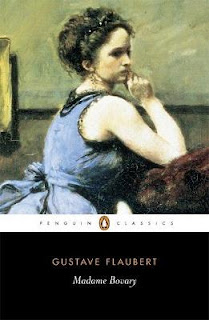
Madame Bovary, Gustave Flaubert

This post contains affiliate links. If you click through and buy I will receive a percentage commission at no extra cost to you.

We first meet Charles Bovary as a schoolboy mocked for his outlandish fashion and an unfortunate mispronunciation of his name due to nerves. His mother dotes on him, focusing her attention on him and the running of their household instead of her increasing frustration with her husband. After one short marriage he finds himself enjoying the freedoms of single life, but then he meets Emma Rouault. He is completely besotted with her and she assents to marriage, imagining her life as a newlywed will meet all of her romantic dreams. Unsurprisingly, life doesn’t quite match up to her imagination, and she embarks on a series of affairs with tragic consequences.

Emma is immature, vain, and foolish. She abuses her husband’s naivety and love for her, thrusting them into grave financial difficulties. She tries only vaguely to conceal her misdemeanours and many of their friends suspect her indiscretions. Charles is loyal and blind to the reality of his marriage. Emma resents him for his happiness while she is so disappointed in her choice of spouse. Her expectations, however, were unlikely to be met, believing that he should know everything and excel in many fields. Charles is broadly mediocre, but in her distress she misses the value of his devotion. Despite her many flaws, Emma is not an unlikable character. Indeed, her belief that everyone else is living a far more exciting, lavish life is one that many can relate to. For those who have felt the depths of darkness descend, her despair at thinking about a future of misery will be familiar, the feeling of panic and helplessness at a future she does not want is claustrophobic and intensely upsetting.

This is a book of high drama and hoped-for passion. Emma does not do emotions by half, imagining herself in a great romantic story. It also deals with the more mundane aspects of married life, so despised by Emma. Charles feels the familiar conflict between pleasing his wife and obeying his mother’s wishes. He is stuck in a difficult situation with a demanding wife who doesn’t love him (a fact he remains blissfully unaware of for the most part) and a mother jealous of the affection he has for his wife, perceiving it to be a rejection of the love she has provided. He is no great romantic hero, but he is kind and loyal. Unfortunately, his story is never destined to end well. He is somewhat reminiscent of Emily Brontë’s Edgar Linton.

Flaubert is famous for having spent years writing and re-writing Madame Bovary, obsessing over every sentence. The result is a compelling read with a dramatic conclusion. 

Pick up a copy:
Bookshop
Waterstones

Wednesday, 23 December 2020

The Quest of the Absolute, Honoré de Balzac

Balzac’s 1834 novel considers the nature of genius and the lengths it will take people to. Balthazar Claes devotes himself to the pursuit of the philosopher’s stone, spending his own fortune and that of his family in the process. Joséphine has always been a devoted wife, but despairs at the destitution he is leading them into, fearing for the life their children will have once she is gone. Early in the novel Balzac writes ‘Too often, vice and genius produce similar results, which mislead the multitude. Genius is nothing more than constant excess, which devours time, money, and the body, and which leads to the poorhouse even more rapidly than evil passions.’, setting the tone for the story to come.

Frequently you will despair as Balthazar’s seeming obliviousness to the needs and lives of those who love him. Despite the failure of his experiments, his family are compelled to offer what they can to help him. The other characters cannot think poorly of him, seeing the agony of a frustrated mind, and so, ultimately, the final line inflicts a sharp wound to the reader.


The family dynamics and role of women in the novel are interesting. Both mother and daughter, Marguerite, try to curb Balthazar’s recklessness to little avail. Indeed, there are moments of softness and affection, where we see that even in the midst of his mania a small part of him remembers his family. On the other hand, these can feel like small consolations of a family desperate to find some evidence of paternal affection. They live in fear of what he will do to himself if his experiments are taken away, and ultimately sacrifice themselves for his intellectual pursuits.


Balthazar is a conflicting figure - his behaviour is unacceptable in many ways, but, near the end of the novel Balzac writes ‘That colossal sorrow, so courageously restrained, had its effect on both Pierquin and Emmanuel, who sometimes felt so deeply moved that they were inclined to offer him the money necessary for a series of experiments: so infectious are the convictions of a genius!’ Whether or not you believe he is a genius, or feel any sympathy for him in his depressed state, Balzac is here offering us a chance to see him through the eyes of those close to him. As an outsider, the willingness to repeatedly bail him out may seem illogical, even foolish, but we are reminded how convincing such a level of conviction can be, drawing all those around him into the pursuit of the absolute.


This is an interesting, accessible book with characters that will keep you pondering after the last page. A great one to try if you want to broaden your classics reading.