Showing posts with label gothic. Show all posts

Friday, 14 January 2022

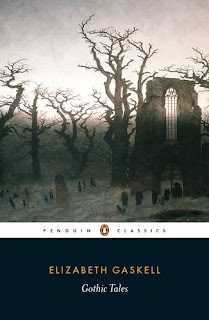
Gothic Tales, Elizabeth Gaskell

This post contains affiliate links. If you click through and buy I will receive a percentage commission at no extra cost to you.

Better known today for her social novels, Gaskell was popular in her day for her ghostly, gothic short stories. In this collection, modern readers are given the opportunity to read a selection of them. From traditional ghost stories to historical fiction and tales of brutal marriages, this is a varied collection, but one with some recurring themes.


Gaskell plays with the idea of past sins cursing future generations. In The Doom of the Griffiths we see how a curse haunts a family for many generations. It was destined that a son would kill his father, breaking the curse. The younger generation feels hopeful and as though there’s a chance of happiness, but, inevitably, things take a turn for the tragic. The Old Nurse’s Story explores guilt and its consequences as the youngest member of the Furnivall household is put in danger because of the wrongs of her elders. It is a truly unsettling ghost story in which a chilling sense of unease will envelop you. The Poor Clare also deals with wrongs being done to an innocent, yet this time the perpetrator is also a victim in a heartbreaking twist.


The prevailing theme of these unhappy tales is the damage male privilege and violence does to those around them, the suffering often falling upon women. In Lois the Witch a young girl is accused of being a witch during the Salem Witch Trials, with everyone so convinced of her guilt that she begins to wonder herself. However, we see the consequences of her rejection of her infatuated cousin and it reminds us of the many ways in which women have been manipulated and controlled through fear and powerlessness throughout history.


The final story in the book, The Grey Woman, features an abusive husband, an unwilling bride, and a desperate attempt to escape once the depth of the husband’s depravity is revealed. It is a claustrophobic, upsetting read in which the trauma of her life leaves the ‘grey woman’ afraid to leave her home and aged well beyond her years.


Family dynamics are explored in a number of the tales. The Crooked Branch shows a son who has been doted on go bad and betray his family and love. You read with regret as they continue to blindly support him, believing he will come back to them. Their good-hearted trust is difficult to read, knowing that it will not be repaid with kindness. Sibling rivalry and an attempt to win favour causes the curse that befalls the family in The Old Nurse’s Story. The judgment and lack of compromise brings far more suffering on them than the consequences of an open mind ever would have.


An interesting collection of stories featuring many familiar gothic and horror tropes. Some tales send a chill to your spine, others don’t hit the mark. Emotions are sure to be stirred by these sad stories that often rely not on the supernatural but on the cruelty of our fellow humans. This sense of realism injects them with yet more power.


Pick up a copy:

Bookshop

Waterstones

Foyles

Wednesday, 15 April 2020

The Turn of the Screw, Henry James

This post contains affiliate links. If you click through and buy I will receive a percentage commission at no extra cost to you.

James’s most famous ghost story is set in a remote house with a small cast of characters. A young governess has recently joined the household and although at first believes it to be an idyllic post, she soon finds herself entangled in a terrible tale. She begins to see ghostly figures around the estate that resemble previous employees who are recently deceased. The two children in her care are well behaved and beautiful but she soon comes to believe they are in league with the ghosts, leading to a tragic attempt to protect them.

The novel is told in first person narrative by the governess (except for the opening which merely introduces the account that follows). We see in her a woman who takes on far more than she can manage in a futile attempt to please her employer, who remains absent throughout. Seeing events unfold through her eyes we are led to understand how she came to her conclusions yet critics have been divided over whether or not the ghosts are real or if she is descending into madness. James’s careful ambiguity has allowed this debate to rage for decades and it is ultimately a question that will remain forever unanswered. Whichever way you read it, it is clear that you cannot take the narrative as absolute truth.

The first appearance of the ghost peering in through the window is truly unsettling and as the story progresses the governess fabricates an internal life for them, imagining their purpose and beliefs despite them never speaking a word or indicating any intention to do harm. Is she allowing her paranoia and imagination to run away from her? Rumours of the actions of both the previous employees hang over the governess and contribute to her belief that their presence will end in harm.

The children have moments of playing up which she believes is a result of ghostly interference, causing a strong reaction in her. The children are unsurprisingly unnerved by the seemingly erratic, extreme responses of their governess. Is she acting in selfless defence of her charges, wishing to be the hero of their story, or are her own delusions causing their strange behaviour?

An atmospheric read that will send shivers down your spine. Whether character study or ghost story, it is an intriguing tale and a sinister one at that. A book that stands up well to a re-read, especially when considering the opposing interpretations.

Pick up a copy:

Wednesday, 19 December 2018

Melmoth, Sarah Perry

This post contains affiliate links. If you click through and buy I will receive a percentage commission at no extra cost to you.


Using Charles Maturin’s 1820 novel Melmoth the Wanderer as inspiration, Perry brings us a modern gothic that forces us to ponder guilt and responsibility. Transforming the wretched wanderer into a woman forced to walk the Earth with bleeding feet as punishment for denying the risen Christ, Perry adds a religious dynamic to the tale. Taking her cue from Maturin, stories are folded into stories as we witness people at their most desperate. Karel Pražan in modern day Prague is haunted by the idea that Melmoth is watching, ever alert for the ripple of her black robes in the shadow. He tries to shake off the superstition, laughing about it with his wife Thea but repeated references to empty chairs left waiting for Melmotka and bloody footprints slowly fading blurs the line between fiction and reality.

Helen Franklin, friend of Karel’s, an unassuming woman hellbent on a self-imposed penitence for the actions of her youth reads through the evidence and testimonials and becomes entangled in the web of misery that surrounds it. Josef Hoffmann’s confession of his role in the Holocaust is the starting block, showing Perry isn’t likely to shy away from the atrocities of history. The juxtaposition of destruction on such a large scale compared to Karel’s betrayal of his recently disabled wife demonstrates that life’s horrors and soul destroying guilt come in many forms. It also lends a relatable humanity to the narrative as we see each character wrestle with their consciences, intermingled so that the reader is in an almost constant state of heightened emotion.

Each tale is heartwrenching but the constant hopping around in the narrative interrupts the flow and lessens the impact as you’re forced to reacquaint yourself with the different time periods and locations. Full of intriguing characters that scream out for more page time, this is a disorienting novel with moments of beautiful prose.

Pick up a copy: