Showing posts with label Australia. Show all posts

Wednesday, 16 March 2022

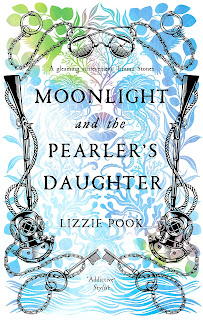
Moonlight and the Pearler’s Daughter, Lizzie Pook

This post contains affiliate links. If you click through and buy I will receive a percentage commission at no extra cost to you.

This post is part of the blog tour for the book. Thank you to Mantle and Random Things Tours for providing me with a copy of the book in exchange for an honest review.

The year is 1886 and the Brightwell family arrive in Bannin Bay, Western Australia, from England. Eliza remarks on the harshness of the land and how very different it is to anything she’s ever experienced before. Her father becomes a successful pearler and the family financially secure. Ten years later however, and we meet Eliza again, alone and waiting for her father to return from an expedition. Instead, she receives news of his disappearance. Before long Balarri, a local Aboriginal man, is arrested for his murder and the police are keen to close the case. Eliza is convinced they are wrong, both about her father being dead, and about Balarri being involved in his disappearance. She is determined to find the truth, and hopes desperately to be reunited with her father. 

The action moves along swiftly in the novel, hooking you in early on. So much happens in the book - tales of grief, shipwreck, drug addiction, and elicit affairs, and yet somehow they pass over you without any lasting effect. The moment of revelation or peril at times captures your heart yet the story moves on at such a pace that there’s no time to absorb what you’ve just read before the next misadventure is in full swing. Many readers might enjoy this fast pace but for me it left me feeling detached from the action and made it a book that was easy to put down. 

The writing, however, is beautifully constructed, with vivid descriptions of the landscape that make you feel as though you’re there. Pook is certainly a fan of similes and at times they feel a little repetitive, but there are also many moments of searing reality in her descriptive choices. 

Pook discusses many topics including the role of women, especially one alone in a dangerous place at a time when women were restricted by their gender. Eliza is headstrong and courageous to a fault, but she reluctantly admits that she needs a male companion to allow her access to certain areas. Axel is a willing companion, and although his presence may be necessary it is Eliza who leads the way and makes some reckless, dangerous decisions. Along the way she meets other women making their own way, at times attempting to live the life of a man. Again, this is passed over so quickly that it barely felt worth including. Alongside the struggles of women is the even more dangerous position of the Aboriginal people. We see from an early stage in the book how they are mistreated and considered guilty without any evidence. Later in Eliza’s travels she witnesses even more so the mistreatment of the original inhabitants of the land and it makes her reflect on her own position there, on the land her family’s bungalow sits on.

Another major theme throughout is family and grief. Eliza has suffered many losses in her young life, and the further disintegration that threatens her family throughout is almost too much to bear. There are moments of real trauma in the flashbacks to the loss of her mother, of the grief of her father and how Eliza experienced the events as a child. This helps to explain her determination to find her father, her need to see for herself what has happened to him. 

This is an interesting, if sometimes predictable read. It feels at times like it’s working to a formula with very familiar story arcs. The conclusion was a surprise, but the characters involved hadn’t made enough of an impression earlier to leave much of an emotional blow. There are short passages interspersed throughout the main text of Brightwell’s diary and an account of someone on the run that keep you guessing how they’re going to interact with the main plot. If you enjoy a mystery with a strong female lead and a brilliant sense of place then this is the book for you.

Pick up a copy:
Bookshop
Foyles
Waterstones


Wednesday, 26 February 2020

The Dry, Jane Harper


This post contains affiliate links. If you click through and buy I will receive a percentage commission at no extra cost to you.

Harper’s debut novel throws you straight in with an eerie opening description of flies finding the bodies of the Hadler family, their youngest, Charlotte, crying with nobody there to answer. It seems a cut and dry case – Luke was driven mad by the crippling drought suffered by Kiewarra and snapped, killing his wife and son before shooting himself. The local police officer, Raco, is not entirely convinced however, there are a few small details that don’t add up. When Luke’s childhood friend Falk, also now a police officer, returns for the funeral, he finds an ally to carry out some unofficial investigations with. It’s not long before we realise there’s another mystery haunting this town, one that drove Falk and his father out twenty years before. The local community haven’t forgotten his disgrace and he receives a cold welcome from most.

Cleverly plotted to keep you reading, you’re taken in by every new apparent lead, only very subtle clues hinting at the real murderer. The finale plays on the drought-ridden surroundings as they head out into the bush. Indeed, the struggles facing the town because of the lack of rain are alluded to throughout. Businesses are only barely surviving, the school is falling into disrepair and tensions are high. The school’s headmaster and his wife have recently moved to the area, hoping for some peace and safety away from the city, but hadn’t realised how isolating and tough it would be. Even Falk, who grew up in Kiewarra, reflects on the psychological effects of looking out across your land and not seeing any sign of another human.

The difficult conditions and remote location means the locals band together. Anyone who wrongs them or who doesn’t fit in is shunned across the board. It is unsurprising therefore that Falk only intends to stay for a day.  His plans are scuppered however as he finds himself more deeply invested in the Hadler case as well as wanting some answers for the mystery that has haunted him for decades.

The parallels between the two mysteries make you question the assumptions made. The heartache of Luke’s family over his perceived crime is realistically drawn and makes them question his past behaviour. An enjoyable read but not one that lingers after you turn the last page.

Pick up a copy:

Sunday, 21 July 2019

We of the Never-Never, Jeannie Gunn


In 1902 Jeannie Gunn, a teacher from Melbourne, moved with her husband Aeneas to Elsey in the Northern Territory. We of the Never-Never is an account of her year there. Her friends at home tried to dissuade her from going and the locals were less than keen to have a woman there, but with time her expectations changed and she threw herself into bush life, making friends and earning the respect of the indigenous people that educated her on the ways of life in the bush.

The tale is not one of high adventure but everyday life in a harsh landscape. The postman visits eight times a year and Gunn is impressed by his endless good humour and punctuality despite the hardships of his job – his predecessor died on his route. The way in which humans are beholden to the land, becoming trapped by the Wet or Dry alternately, is made abundantly clear. The misunderstanding of life in the bush by those in the South is commented on. They wonder how bush-folk fill their time little understanding the challenges of survival and the beauty of life there. ‘Speed’s the thing,’ cries the world, and speeds on, gaining little but speed; and we bush-folk travel our sixty miles [in three days] and gain all that is worth gaining – except speed.’

Having been written at the start of the twentieth century some of the language used can be offensive to modern readers, but there is a glimmer of modernity in her comments on the hypocrisy of colonialists who criticize the violence of the indigenous people while taking their land by force, not to mention the way in which they treated the captives brought with them.

An enlightening read on a way of life so different to that of a city dweller. Gunn is honest in her tales, including moments where she is laughed at and being open about how unprepared she was. During her year in Elsey she comes to have great affection for the land and its people and although I can’t help wondering if the locals would really have agreed with her including herself in ‘us bush-folk’ having spent only one year there, it nonetheless aids in telling stories that would otherwise go untold.

Pick up a copy:
Foyles
Waterstones

Saturday, 27 January 2018

Australian Travels Part Two: Canberra to Melbourne

Our short stay in Canberra was over before we knew it and soon we were heading south. Eden was to be our destination but we couldn’t resist a stop off at ‘the snow’ en route.  The green landscapes turned to the brown more commonly associated with the Australian outback before entering the lush mountain area. A brief pause at Jindabyne was necessary to buy passes for the Kosciuszko National Park. It was a very brief stop which was a shame as the mountains and lake (which covers the previous site of the town) shimmering in the sunshine were begging to be explored.

We arrived at Thredbo as the first flutterings of a snowstorm were floating through the air. An obligatory snowball fight later and we were back on the road again. Even the skiiers were moving away from the mountain as visibility had decreased so drastically.
 
A seemingly interminable drive along dark and twisting roads followed until we finally arrived at Eden Beachfront Holiday Park where we passed a chilly night (a natural hazard of winter travel). With the rising of the sun the next morning we realised what beautiful views we had stretching out to sea. Our first tourist stop was the Killer Whale Museum where we learnt about how whalers and killer whales worked together to trap humpback whales that entered Twofold Bay. I admit boats and whaling don’t exactly get my heart racing but it told a fascinating tale, and I skipped through the rest of the exhibitions. A walk along the beach to stretch the legs and soak up some fresh sea air made a welcome interlude before heading to Boyds Tower.

The tower is a short walk from the car park along an accessible path lined with melaleuca trees, signs of bush fires apparent. When built in 1847 it was one of a number of similar structures, many of which did not survive as they were made of wood. Boyds Tower was built of sandstone so weathered the years better. It does show some damage from its age however, part of the top missing from a lightning strike in the 1860s. Unfortunately, visitors are unable to climb the tower but any disappointment will be washed away with views from the lookout. Eden is very aptly named.

Green Cape Lighthouse is a 31km walk away but alas the sun would begin to fade before we could cover such a distance and so had to rely once more on the car. When built in 1883 it was the tallest lighthouse in New South Wales but lost this title shortly afterward with the construction of Smoky Cape in 1891. Green Cape was replaced by a solar power light tower in 1992 but the original structure still stands and if you time your visit right you could be treated to a tour.

The very nature of a road trip means there’s never much time in any one place and soon we were on our way to Lakes Entrance, our first stop in Victoria. Unfortunately, everywhere seemed to close by 8pm so we struggled to find anywhere for dinner (our only choice in the end was a takeaway pizza place which turned out to be satisfyingly tasty). The benefit of arriving in the dark is the pleasure of waking to unexpectedly beautiful views in the morning, especially after another cold night. The water with boats floating gracefully atop was serene as the sun glimmered off the still surface.

A walk along the sunny esplanade led us to Esplanade Mini Golf, a wonderfully fun course which is just how I imagine crazy golf should be and yet very rarely is. Just across the road is Charnwood café, a charming little eatery
attached to a gift shop. The perfect place to warm up and toast the victor. A few more stops to look at various of the Gippsland Lakes and we were back on the Princes Highway heading for Melbourne.

Sunday, 31 December 2017

New Year musings

Here we are, once again, on the brink of a new year and wishing a fond farewell to the year that’s passed. 2017 has been a challenging year for the world generally with worrying political situations, the loss of some well loved figures, and more terrorist attacks than I care to count. I hope for a more peaceful and kinder 2018.

Personally 2017 was quite an eventful year with its ups and downs. I want to take this time to reflect on the good times, the positive changes, the places that took my breath away, and the books that captured my imagination. If I were to sum up what I’ve learnt this year in a sentence it would be to take care of yourself and find time for the things (and people) you love. I’ve done this professionally this year, switching my focus from the daily grind to explore ways to find a more fulfilling life. That’s not to say I’m not working hard, in many ways I’d say I’m working even harder, but if you find the right focus for that work it can make you so much happier. Another thing that has become so important to me is yoga. I’d never done it before this year but now have a daily practice, mostly under the guidance of Adriene Mishler through Yoga with Adriene. Honestly, this has been one of my best discoveries of the year. If you want to strengthen your body whilst also tending to your mental health I can’t recommend her Yoga Camp series highly enough.

Other big news – I finally put pen to paper and got some words down for my first novel. I signed up for NaNoWriMo to give me a push in the right direction, and it definitely worked. I may not have officially ‘won’ NaNo but I have words on a page that weren’t there before and a much better writing routine. As far as I’m concerned that is a win. I also engaged with the group of writers around the world taking the time to create. This was a wonderful encouragement and source of advice as well as giving me a genuine feeling of joy thinking about the mass creative output happening throughout the month.

Travel has been a highlight of the year. Within the UK I had opportunity to spend more time in beautiful Cornwall as well as the chance to visit Haworth once more, a place that feels something like my spiritual/inspirational home. I was also lucky enough to go to France once more and enjoy the natural beauty of the Alps in autumn (whilst eating copious amounts of cheese). The big trip, however, was Australia. I was fortunate to travel around the east of the country and experience some breathtakingly beautiful places, including snorkeling on the Great Barrier Reef. More on all of this if I ever find the time to write up more detailed posts from my travels.

Reading-wise I continued with my tradition of reading books written or set in the countries I visit, which this year also included taking the plunge with books in French, which I'm still working my way through. Bill Bryson’s Down Under entertained me, but may have convinced me that I would likely die while out there (I returned mostly unscathed I’m happy to report). I also caught a glimpse of the desert through Robyn Davidson’s Tracks and Picnic at Hanging Rock by Joan Lyndsay provided some atmospheric mystery to spark my imagination. Overall, there haven’t been any great stand-out books for me this year. Good books certainly, but none that I remember completely absorbing me (excluding the re-read of Wuthering Heights of course). There are more books in my to-read pile than I would have time for this year so it could go any way, but I definitely intend to read my first George Eliot soon.

It was a strong year for exhibitions – when in Melbourne I thoroughly enjoyed the Aardman exhibition at the ACMI. It was fun and playful and showcased some incredible talent. Closer to home, the Opera exhibition at the V&A and the Harry Potter exhibition at the British Library were definitely highlights. See my full posts for why. Both still open, so it’s not too late to enjoy them. A smaller offering from the National Portrait Gallery, The Encounter: Drawings from Leonardo to Rembrandt left a big impression. It was wonderful to see sketches done by such masters, and honestly the experience improved my own work. As for what I’ll be visiting this year – Winnie the Pooh at the V&A promises to be delightful, and Tate Britain’s Impressionists in London looks promising.

As always, let me know what you’re reading, what you’re visiting, or where you’re travelling. All that’s left to do now is wish you all a very happy and healthy 2018. See you on the other side.

Monday, 11 September 2017

Australian Travels Part One: Sydney to Canberra

Not long after having arrived in Australia I found myself learning how to handle an automatic and navigating Sydney city centre. This is one thing that amazed me until the day I left – everybody seems to have a car, and drive through the centre of Sydney without a second thought. How different to London where most feel driving to be unnecessary, and for those that do, venturing into the heart of the capital by road is almost unthinkable. A brief drive to pick up my fellow road trippers and we were heading out of the city to make our leisurely way to Canberra.

Gumnut Patisserie
Barely had we left when the roads began to empty and the houses became infrequent. We stopped in historic Berrima for some lunch. At first it felt as though the town was closed, the first few eateries we tried either being shut entirely or having stopped serving. This turned out to be fortuitous however as we ended up in Gumnut Patisserie. We hadn’t expected to find more than a few pies on offer but were greeted with a wide range of beautifully crafted patisserie that wouldn’t have looked out of place in a French patisserie. Having sampled some of their delicious savouries and sweet offerings we went happily on our way. Leaving with pleasant opinions of the place, on further inspection I fear we may have done the town a disservice. It is widely recognized as Australia’s best preserved example of a Georgian village on the mainland, and had we lingered longer I’m sure we would have discovered many more treasures.

The Big Merino
Our next stop was the Big Merino, a 50ft concrete construct, and one of over 150 ‘big things’ dotted around the country as eccentric quirks standing out from the landscape. Originally opened in 1985 but moved in 2007 to capture the attention of more tourists it now sits beside a petrol station and McDonalds. Within there is an exhibition on the history and uses of merino wool and you can climb to the top to look out of the eyes of Rambo, as he is affectionately known. The rest of the structure is taken up with a gift shop selling you average souvenirs, merino clothing, and some merino wool yarn and knitting patterns, which naturally I couldn’t resist.

The final landmark before entering Canberra was Lake George, which admittedly did challenge my idea of a lake, being completely devoid of water. This, in part, is what makes it famous, its constantly shifting water level as well as its location making it one of the most studied lakes in Australia. It may not have had the vast expanse of water I was expecting, but a lookout point on its perimeter proved the perfect spot for some stargazing.

Remains of a telescope at Mount Stromlo
A refurbished telescope at Mount Stromlo
We arrived in Canberra after dark so didn’t see much of it on our way in, however, we did dine by the water, which wasn’t a bad introduction. With the rising sun we went to experience the city by daylight. I had heard that it’s a very green city, but nothing had prepared me for the surrounding mountains, and how much it just didn’t feel like a city. In fairness, we didn’t really explore the centre, but I’m reliably informed that there isn’t really one. Instead, we headed for the mountains and Mount Stromlo Observatory. The original observatory was destroyed in the bush fires of 2003, and as you approach you pass the burnt out shells of the previous buildings. It makes you stop in your tracks and ruminate on the haunting remains. It’s not otherwise somewhere that you’d spend a long time, although I imagine in summer it would make a beautiful picnic spot, and I believe there are a number of walking and cycle tracks in the surrounding area. Inside the visitor centre is a small exhibition and a cafĂ© with gorgeous views, which seemed to be why most people were there.

Our next stop was Canberra’s Deep Space Communication Complex, part of NASA’s Deep Space Network. The exhibition space here is larger and has several interactive displays to keep visitors of all ages entertained. You can see the large antennas across the site and there are boards in the exhibition with details of what they are tracking. We were even lucky enough to see one of them move.

After a short time we were back on the road again and heading for Corin Forest, a mountain recreation resort. There was no natural snow on the mountains but they have a snow play area so icy fun can be had even when the weather doesn’t oblige. After a snowball fight or two it’s pleasant to warm up again next to the open fire in the visitor centre. It wasn’t as forest like as the name suggests but a great place for a family outing. This is also where we saw our first kangaroos of the trip, which definitely made it worth it. Slightly further down the road was a short walking track leading to a waterfall which is well worth a look.

Our trip to Canberra was short but sweet and far more scenic than I had previously imagined.