Showing posts with label romance. Show all posts

Sunday, 13 July 2025

Think Again, Jacqueline Wilson

This post contains affiliate links. If you click through and buy I will receive a percentage commission at no extra cost to you.

Millennial women rejoiced when news of Jacqueline Wilson’s first adult book was announced. Twenty years after Girls in Tears was published we had a new instalment to look forward to, a chance to see where Ellie, Magda, and Nadine ended up. All still friends, life isn’t going entirely smoothly for any of them. Ellie has just lost her beloved freelance illustrator job, Nadine is determinedly remaining a free spirit but getting herself in some dangerous situations, and Magda is trying to be a good step-mum as she prepares to marry Mr Right the third. As with all the Girls books, the story follows Ellie, and we actually don’t get all that much time with Magda and Nadine, a consequence of the way many friendships go in adulthood as everyone gets busy with their individual lives. Ellie has lived a determinedly independent life, raising her daughter alone on a council estate that her family constantly tried to convince her to move out of, yet despite this determination and strength, she still has a lot of the hold-ups she did as a teen and lacks the confidence to make her voice heard.


I haven’t read the original series since being a teen and so don’t have a clear memory of all the finer details of the plots and characters, but there’s enough reminiscing to nudge the memory. Ellie’s birthday party serves as a vehicle to re-introduce a lot of familiar characters and catch up on where life has taken them. One particular character, not at the party, becomes central to the story. Former art teacher Mr Windsor, who the girls all had a crush on, surprises Ellie with his eagerness to meet up after so many years. It soon becomes clear however, that he still sees himself as her superior, lecturing her about art endlessly when he knows she has studied and continues to work in it. He has very particular ideas about the way things should be and tries to mould Ellie’s life to fit this. He still seems to think of her and her friends as giggling teenagers, and judging from what we learn of his other romantic encounters, he prefers his women young. His character in this book is overbearing and a bit sleazy. Ellie struggles to hold on to her annoyances when he is being kind, and she reasons that perhaps she’s just being difficult. Magda and Nadine, do, after all, tell her that the mansplaining and ignoring what she wants is all part and parcel of dating men, a sad suggestion of the kinds of relationships they’ve been in. It becomes a frustrating relationship to read as she grows ever more discontented but can’t bring herself to trust her gut enough to leave. 


This is a recurring theme throughout for Ellie. Whether it be telling her family how she actually wants to spend her birthday, or being honest with Lottie about the lies her estranged father tells her. She seems to still be unsure of who she is, and if being herself is OK. When she meets a new friend at an impromptu swimming session she realises how different it is with someone you feel comfortable with, who is genuinely interested in your life. Alice becomes an important part of her life almost instantly, and she often finds herself desperate to hear from her. Alice appreciates Ellie’s art, and in return Ellie is impressed by her professional knowledge and writings about elephants, which links directly into a new project Ellie is tentatively working on. The scenes with Alice are nice to read, seeing Ellie finally relax and feel able to share her desires. 


We’re told that Ellie and her daughter Lottie are close, although they’re going through the difficult adjustment period of her having left to go to University. The interactions we see between them however are always brief, the dialogue is a little awkward, and Lottie often seems to forget to consider her feelings. She feels mostly a vehicle to compound Ellie’s loneliness with her absence, pushing Ellie into the next stage of her motherhood journey. There are a lot of issues in this book that could have been explored more deeply and I think this relationship and the shifting nature of the parent-child relationship as they become adults themselves is one of them.


There’s a sense while reading this that Wilson is having a lot of fun revisiting these characters. They even reference other of her books throughout (Lottie being named after one of them!) which some readers will enjoy, others less so. It’s an easy read and at times quite enjoyable but Ellie doesn’t feel like she’s matured, some storylines could have been wrapped up much quicker while others could have used more time to breathe. The ending felt rushed and there were some storylines where their lack of a real conclusion felt unsatisfying. It was nice to catch up with old, beloved characters but there’s definite room for improvement. A nostalgia fest for fans of the originals, probably not a book to entice new readers.


Pick up a copy:

Waterstones

Thursday, 12 December 2024

You Are Here, David Nicholls

This post contains affiliate links. If you click through and buy I will receive a percentage commission at no extra cost to you.

Driven and successful Cleo is determined to help her divorced friends out of their shells and back into the world of fun with friends. Michael, a geography teacher at the school she leads, is struggling with his mental health, and very much prefers his own company. Repeatedly rejecting her offers of company on hikes, he eventually relents and agrees to a group joining him for the first few days of the 190 mile Coast to Coast walk he is about to embark upon. Marnie, living alone in London, and being a freelance copyeditor, has very little opportunity or inclination to spend time with others, always hoping for a cancellation to come through for any plans she’s reluctantly agreed to. She’s not a walker but agrees when Cleo invites her for the walk, thinking it might be just what she needs. Arriving in all new waterproofs and walking boots, she appears the inexperienced hiker Michael had suspected would be joining him (although he certainly doesn’t make the route any shorter or easier to allow for this). Cleo invites a London pharmacist along who she thinks would suit Marnie well, and triathlete Tessa for Michael. When Tessa doesn’t show and Conrad scurries back to London at the first signs of rain, their focus is forced on each other. What follows is a gentle opening up, companionship in long distance walking, and a few geographical tidbits thrown in for good measure.


The opening chapter introduces us to Marnie, and the descriptions of how her world has shrunk with age and the isolation which is inherent in remote working are painfully relatable. At thirty eight she feels left behind by her friends who are happily married and distracted with raising a family. Even when she is invited to events, on the rare occasions she goes, she is aware of the awkwardness of being the divorcee of the group, and the quiet matchmaking that her friends inflict on her. As the book progresses we get an insight into her own unhappy marriage, and although she often presents it with a hint of humour it’s clear it has left deep wounds. Despite feeling too old to start again she embraces the opportunity of the walking holiday, feigning interest in Conrad’s Formula One obsession, persevering when the weather makes the walk more than unpleasant, and generally flitting around lightening the mood.


Michael’s marriage feels like a very different beast. Him and Natasha tried for a long time to get pregnant but this took its toll, and when a brutal attack left him physically and mentally scarred it pushed them too far and they separated. It feels like there’s still a lot of love between them and a genuine desire for the other to be happy. He continues to live in their marital home, some of her possessions still there, living what feels like a half life. He spends as much time out walking as possible, in part to escape a home that no longer feels like one. He is full of anxiety and struggles to talk about what’s led him to this point. When he does make an effort it is sweet and you hope that things will work out. Will the walk show him that nature will only go so far in healing, sharing it with another might just be the key. But is he ready to let go of the hope of reconciliation with Natasha?


Conrad may be a decoy for Marnie to begin with, but it’s clear to the reader that the potential romance will be with Michael. At the outset he hopes to continue the walk as if he were on his own, walking ahead of the rest of the group, but as numbers dwindle this becomes increasingly difficult. Marnie spends most of some of the days swearing at the mud and at him for lying to her about the challenges ahead, but he gradually learns to enjoy the company, and as her departure date approaches they’re both reluctant to bring the walk to an end. She teases him gently about his love of geography and finding what others see as quite boring to be of great interest. He listens to her open up with genuine interest and care.


The walk and landscape itself is central to the novel. The peace and companionship of walking with another, whether or not you’re talking, is well drawn, and the misery of being stuck miles from anywhere in wind and rain will be familiar to any keen hikers. Each accommodation is well described, with an ongoing joke about the wifi passwords, and it really brings to life the cosy pubs, the stodgy food, and attempts to keep your clothes dry before putting them on again the next day. This is not an idealised version of the English countryside but does highlight the camaraderie of long-distance walking and the friends you make along the way. 


A lovely, easy read which will put a smile on your face. The characters are believable, and although slightly frustrating at times, their backstories are shared enough that you understand what’s made them the way they are. A gentle love story that isn’t without its upsets, you long for them to find comfort in each other. 


Pick up a copy:

Waterstones

Bookshop

Friday, 6 January 2023

Dragonfly in Amber, Diana Gabaldon

This post contains affiliate links. If you click through and buy I will receive a percentage commission at no extra cost to you.

Please note, this review contains some spoilers. The book is the second in a series so will also contain some spoilers for the first book.

Outlander ended with Jamie and Claire about to embark on a new life in Paris. It is a surprise, therefore, to find Claire at the beginning of the following book in Inverness in 1968. She is there with her grown-up daughter Brianna, Frank is dead, and she is struggling with the emotions of being back in a land that holds so many memories for her. We are not told what has happened in the intervening years, just that Claire believes Jamie to have died at Culloden and that Brianna knows nothing of him. When Brianna and Roger take Claire to the grave of Jack Randall, thinking it will be a nice surprise to see the final resting place of one of Frank’s more famous ancestors, her control unravels and the truth comes out.

We then jump back to 1744 and Claire and Jamie’s attempts to stop the uprising and save so many lives. Jamie becomes a trusted confidante of Charles Stuart and he struggles with the deception required, going against a cause he himself believes in and betraying those who trust him. Their cause may be noble but it is dangerous. Their guilt is not helped by the fact they don’t know if it’s even possible for them to change the course of events, and there are times when their actions seem as though they might make defeat more likely.

The other aspect of the future they’re concerned with is Frank’s existence. Claire still feels desperately that they can’t do anything that will risk his line of descent. Jamie struggles with her obvious care for another man, especially as it means denying himself revenge on his torturer. There are questions over what responsibility there is to protect an innocent man at the cost of allowing a villain to go unpunished. Later in the book Jamie admits that it wasn’t a sense of obligation which encouraged him to follow Claire’s request, but a desire for her to have someone who loves her to return to should the need arise. This offers a sense of their relationship and the deep love they have which surpasses their own individual needs.

Their relationship isn’t perfect however. There are moments of jealousy - they both receive unwanted attention at the Palace which makes the other uncomfortable, and have both been forced into sexual relations with others for different ends. They fight and they make up, both headstrong and fiery. The different times they were born in naturally throws up some differences in outlook but perhaps not as much as you might expect.

The toughest challenge, however, comes with the loss of their baby. Claire miscarries while Jamie is engaged in a dual with Jack Randall, causing a double blow to their relationship. She blames him for the loss, but she also blames herself. They have a period of separation during the aftermath but when they finally find themselves face to face Claire realises that part of the reason she doesn’t want to be near him is because it will force her to feel all the difficult emotions she has tried to hide from. Their shared grief is realistically written and painful to read. We know from the opening chapters that there is another child but that they won’t raise it together, making this loss all the more painful. 

The breadth of this book is quite remarkable. The structure, although disorienting to begin with, leaves you with many questions you’re eager for answers to. The final revelation will leave you desperate for more, even as someone who has watched the TV series and knows what’s coming next. Brianna naturally struggles to believe Claire’s story and there is much about their life with Frank which is left unsaid. New characters have been introduced, old ones reappear, while others bow out permanently. Gabaldon writes interesting characters designed to tug at your heartstrings. There are clear lines between the heroes and the villains with only the occasional concession to a softer side to otherwise despicable characters. I look forward to getting to know many of them better over the series. There is so much to get stuck into in this novel that it’s difficult to write a concise review, but needless to say it is an emotional read, and one which provides much anticipation for the next book.

Pick up a copy:
Bookshop
Waterstones

Tuesday, 1 March 2022

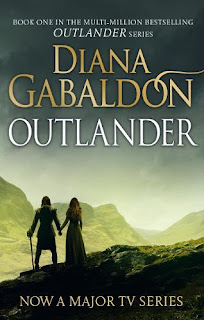
Outlander, Diana Gabaldon

This post contains affiliate links. If you click through and buy I will receive a percentage commission at no extra cost to you.

It’s 1946 and Claire Randall is in Inverness with her husband Frank, reconnecting after a long separation due to the Second World War. Their days are filled with exploring the Scottish Highlands, Frank’s genealogical research, and time getting re-acquainted with each other. One day, however, Claire returns to a circle of standing stones they’d come across on one of their outings and before she knows it she’s passed through one of them and landed in 1743. Here she meets Black Jack Randall, one of her husband’s ancestors, but without any of the gentleness of his descendant. She’s soon whisked away by a group of Highlanders and becomes their captive while they try to work out if she’s an English spy, or threat in another way. During this time she desperately tries to find a way to escape and get back to the stones and Frank. It soon becomes apparent that this will be no easy feat, and that there are many barriers between her and the stones, not least her own heart.

She is naturally disoriented and confused when she first arrives, not understanding what has happened. Once she’s accepted that she has travelled through time she keeps it together as much as possible, but it’s not easy. She is distraught to have been separated from Frank and desperately worried about how he will be coping with her mysterious disappearance. Her medical ability and the openness of the Highlanders to let her heal them helps to ground her, reminding her that these are real people, and giving her a sense of herself. She is not mistreated but she is nonetheless a prisoner, and one that is approached with suspicion. She uses techniques that Frank has told her about from his experiences during the war - when under interrogation to tell the truth as far as possible. His interest in history also proves useful as it provides Claire not just with information that helps her fit in to the time more easily, but also some privileged knowledge which she is able to use as a bargaining tool. Of course, there’s also the difficult position of knowing how history is going to pan out without being able to help change it.

Despite her knowledge there are still many times when her modern views put her and others in danger. Her use of language is frequently in contrast to other women of the time, but it is her inability to stomach some of the cruelties and injustices of the time which cause the most problems. Her response to witnessing physical punishments remind us that although we know about these things happening in the past it is an entirely different experience witnessing them first hand. She also reflects on her own time, on the blame placed on normal German citizens, and how unfair this is when faced with a mob. She is ashamed to discover that self preservation kicks in ahead of saving others.

Luckily for Claire, Jamie Fraser, the hero of the series, is frequently on hand to help not just her, but others in a sticky situation. There are times, however, when he becomes frustrated with Claire, as the reader does, for constantly ignoring those who know the time better, and putting others at great risk as a result. Claire is by no means a damsel in distress, more than willing to stick up for herself, and indeed to kill, but Jamie is often needed to save the day in the typical heroic fashion. At times you’ll find yourself rolling your eyes at how deeply embedded certain topes are, but this does not take away from the enjoyment of the story.

Jamie’s initial introduction, however, is understated - he is a regular Highlander, injured and unassuming. His thoughtfulness and care are built up over time as Claire sees more of his interactions with others, as well as developing an easy rapport with him herself. She feels safe with him, and he promises from the off to protect her. He is clearly a moral man who cares about others, but it is their wedding that will make the reader fall for him. It is a marriage of convenience but he looks after the little details to try and make it special for her. His innocence on their wedding night is endearing and a nice inversion of what we have come to expect from such stories. Criticism has sometimes been directed at the series for the anachronistic modernism of Jamie’s character, but in this first book we see some less appealing aspects that would be more in keeping with the time. He strongly believes in her duty to obey him, a fact that Claire pushes back against. He also beats her as punishment for disobeying, and there are some sex scenes between them which feel uncomfortably close to assault. Even at gentler times she acknowledges that saying no is not an option. 

Despite certain misgivings, both Claire and the reader feel fondly toward Jamie, and as they grow closer she becomes consumed with guilt. She can’t reconcile having married another man, but also feels the cruelty of planning to leave Jamie, who is clearly quite infatuated with her, without warning or explanation. When she finally has the chance to leave she must make a heartbreaking decision as to which man she can’t live without. This is a pivotal, emotional moment, and one that demonstrates the depth of feeling that has developed between the newlyweds.

This is an enjoyable, addictive read. There are many moments of humour throughout and a wonderful host of characters. Gabaldon is careful to remind the reader of Frank when they’re at risk of getting too swept up in the love story of Claire and Jamie. Black Jack Randall provides an unwelcome reminder of her first husband - she often comments on their similarities and the expressions that in one evokes love and in the other horror. This is a clever addition and makes you wonder if Claire would be able to put the memory of him to one side if she were able to get back to Frank. This book should come with a trigger warning for sexual assault as it is alluded to throughout and described in realistic, upsetting detail. At times it feels as though the threat of rape is exaggerated, with all the men seemingly a danger after a few drinks, but the most disturbing incident is dealt with well. It does not feel gratuitous and the emotional consequences are considered quite deeply. 

The book doesn’t shy away from difficult events, and although Gabaldon admits to the history knowingly being incorrect at times, it doesn’t cause a block for readers. There are some sections that drag a little but mostly it is hard to put down. There is love, heartbreak, peril and adventure that will be plenty to keep most readers entertained. If you enjoy books that stir up the emotions this is certainly one for you, and the good news is there’s another eight books to enjoy after this one.

Sunday, 26 December 2021

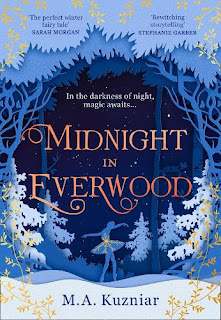
Midnight in Everwood, M. A. Kuzniar

This post contains affiliate links. If you click through and buy I will receive a percentage commission at no extra cost to you.

Nottingham, 1906, Christmas is on its way and with it, the end of Marietta’s dreams of becoming a professional dancer. Ballet is her life, the thing that gives her voice, yet her status-obsessed parents require her to give it up to marry well and live the life of a society wife. When the mysterious Dr. Drosselmeier moves to the neighbourhood he is met with countless invitations, parents falling over themselves to match him with their daughters. It soon becomes clear however that Marietta has caught his eye, and he becomes fixated on possessing her. In an attempt to escape an unhappy fate she finds herself stumbling into Everwood, a magical land that appears to hold wonderful potential. It doesn’t take long for the cracks in this sweet world to begin to appear, and Marietta wonders if she will ever find her way home.


The figure of Drosselmeier is deeply unsettling. He is manipulative and over-confident, invading Marietta’s personal space and lacing their outwardly polite conversations with thinly veiled threats. His behaviour is masked by the charming persona he puts on with the rest of her family, and even Marietta’s beloved brother Frederick dismisses her concerns when she raises them. In the depths of Everwood she continues to be haunted by Drosselmeier, who appears in her nightmares, and at times seems as though he might be there in person. He is a textbook abuser, but has the advantage of magic, making her situation feel all the more helpless.


Marietta lives a stifled life of expectation in her family home, denied the possibility of even expressing her desires. She has an ally in Frederick, who is also forced to deny his true self to fulfil the role demanded of him. Marietta does have moments of disobedience, but once she enters Everwood she becomes increasingly defiant. At times entirely warranted, at others foolhardy and excessively contrary, she can be a slightly frustrating protagonist. We see her grow over the course of the book however, her captivity offering her freedom in other ways. She learns to open herself to others, and to re-evaluate her perceptions of her own privilege. Her experiences in Everwood prove her strength and change the way she views the world and her place within it. 


Everwood itself is richly drawn and decadently described. You can easily picture the lavish balls, smell the sweet scent of the sugared world (and worry at the state of their teeth living off a diet predominantly consisting of sugar), and imagine the gorgeous creations that Marietta, Dellara, and Pirlipata are dressed in as the king’s pets. We see the world as Marietta does, and witness her disillusionment as she discovers the world outside the palace and the suffering inflicted on the many for the benefit of the few.


The tyrant King Gelum displays some uncomfortable similarities to Drosselmeier - a desire to possess at any cost. He delights in the suffering of others and does not think twice about destroying those who cross him. Marietta soon learns the harsh consequences of defiance, but also the power of friendship and the willingness for sacrifice that comes with such fierce bonds. In such an intense environment passions run high and despair and love are intensified. Marietta learns not only of the power of sisterhood, but feels her first flushes of romantic, heartbreaking love.


This is an enjoyable, enchanting read that’s perfect for the festive season. Pedants like me will find the constantly odd sentence structures distracting, as well as Kuzniar’s passing fixations with certain slightly unusual word choices that feel unnatural. Nonetheless, you will be so swept up in the magical world, and keen to find out what happens next that this can be forgiven. Recommended for fans of modern fairy tales, light fantasy, romance, ballet, and cosy winter reads, this book ticks a lot of boxes.


Pick up a copy:

Waterstones

Sunday, 14 June 2020

Crossing in Time, D. L. Orton

This post contains affiliate links. If you click through and buy I will receive a percentage commission at no extra cost to you.
This post is part of the ultimate blog tour for the novel. Thanks to the publishers and The Write Reads for providing me with a review copy of the audiobook.

Isabel and Diego’s relationship takes centre stage in this light sci-fi novel. They live through a time of huge global difficulty, nuclear war threatens and a deadly disease is spreading fast. It becomes clear that going back in time to mend their broken relationship is the only way to save humanity, even if it means risking their own lives. With both characters unreachable in different times and places, will they be able to save the day and find their way back to each other?

From the first time we see them together, in a chance meeting after years apart, we see how their relationship crumbled. Isabel blames Diego for letting her go after she had an affair, taking little responsibility for her own mistakes. When she goes back in time and meets a younger Diego who hasn’t met her yet, she spends her time lecturing him on how to put up with her own problems and inconsistencies, putting all the emphasis on his behaviour. In many ways she doesn’t come across as particularly likeable but the experience does at least teach her to see their past in a new light. Despite their problems, there is an undeniable attraction between them that always draws them together, whether it works out or not.

A recurring theme throughout is Isabel’s relation to men and their attempts at dominance and violence against her. From the opening, a dystopian world in which people are trading laptops for food and in which she has reluctantly come to realise she needs a gun, the men she interacts with all seem to have one thing on their mind, and they are a threat to her. Later, when she is alone and vulnerable, an anonymous attacker attempts to rape her, and, in a different way, her ex-husband tries to maintain dominion over her. He uses his position to force her hand in terms of her work and manoeuvres the situation so that she has to hand over all her research. Perhaps this goes some way to explain why she is so demanding of Diego, she sees it as a relationship she has some control over.

A sci-fi novel might seem like a good source of escapism at the moment, but there are certain parallels that are a bit too close to the real world at the moment. There are some brief mentions of climate change and the need to act, but more so is the pandemic rapidly spreading and the desperate hunt for a vaccine that hasn’t been corrupted. There are throwaway remarks about the possibility of shortages of supplies such as flour and toilet roll, the weak and incompetent leaders delivering the response, and the impact this will have on international relations as well as civil unrest. Everyone is also told to stay home yet many ignore the advice. This was an unexpected aspect of the book and it was strange seeing our own world mirrored so closely in fiction.

Overall, an average read - the plot doesn’t entirely make sense the whole time and the characters aren’t ones you particularly root for. Isabel is blind to her own faults and Diego speaks largely in platitudes and puns. There’s a lot of work around developing their relationship so if you’re after a fast-paced sci-fi adventure then this is probably not the book for you. The most successful aspects are the most human – the grief, the reaction to a broken relationship you can’t move on from, and the little quirks only one who loves you would notice add a sense of reality to the characters. The first in a series, there’s still a lot more to be uncovered.

Pick up a copy:

Foyles

Waterstones

Sunday, 7 June 2020

Lorna Doone, R. D. Blackmore


This post contains affiliate links. If you click through and buy I will receive a percentage commission at no extra cost to you.

Published in 1869 and set in the seventeenth century, Lorna Doone is Blackmore’s most famous book, and the only of his once popular novels that is still readily available. It tells the story of John Ridd, an Exmoor yeoman, and his love for Lorna Doone. The name Doone is met with fear and disgust by the locals, having been terrorized by them for years, they even killed John’s father. Lorna, however, rejects their way of life and wishes for the freedom to be with John despite other plans being firmly in place to keep her within the Doone family.

John narrates the tale, although does at one point pass the narrative over to Lorna. He speaks directly to the reader at times, giving glimpses of what his future looks like as well as little asides on his views and opinions which are not always endearing to the modern reader. He is however largely portrayed as kindly if a little vain and you do find yourself hoping that things turn out well for him.

It may be Lorna’s name on the title page but she is not often part of the action, being in large part the greatest dream of John’s heart, who is utterly enchanted from their first meeting. Some readers accuse her of being weak and overly compliant yet there are glimmers of strength within. For example, she tells John that the Doones are ashamed of their villainy in front of her. She must therefore have expressed her distaste for their behaviour, to hold some kind of power over her manipulative and uncaring relatives is no small feat. She is also resilient, growing up in violent surroundings with very little love shown to her, and then trying to fit into the Ridd family when there is a certain level of distance due to her social standing.

The novel is rich in descriptive detail and the landscape is brought to life in much the same way you find in a Hardy novel. Indeed, one of the reasons the local community turn against the Doones, aside from their violence and thievery, is the way they misuse their land. In many ways this is a moral tale, but one in which people are easily forgiven if they exhibit signs of kindness. ‘Everybody cursed the Doones, who lived apart disdainfully. But all good people like Mr Faggus – when he had not robbed them – and many a poor sick man or woman blessed him for other people’s money…’ Mr Faggus is a highwayman, but his involvement in the community and the occasional kind action allow him to be embraced by the very people who may well be his next victim.

This is a long book that could likely have been cut down while still retaining its appeal. For the moments where it drags however there are many more where you become completely absorbed in the story and the writing, which at times feels almost poetic. The Doones are brilliantly drawn villains and never fail to live up to their reputation. There are moments when the tale seems to go off on a tangent and you’re left wondering quite how you got there. Nonetheless, this is a great read with a dramatic, violent climax.

Pick up a copy: