Wednesday, 4 May 2022

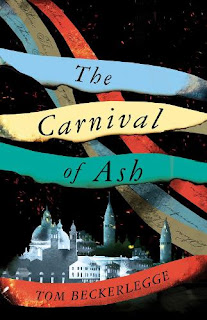
The Carnival of Ash, Tom Beckerlegge

This post contains affiliate links. If you click through and buy I will receive a percentage commission at no extra cost to you.

This post if part of the blog tour for the novel. Thank you to The WriteReads and Rebellion Publishing for providing me with a copy of the book in exchange for an honest review.

Cadenza is a city in turmoil - its leader recently dead and a whole host of intrigue and violence occurring just below the surface. The risk of this instability is heightened by the ever present threat of its rival, Venice. Cadenza is a city of poets, where literary talent is highly valued and there are libraries around every corner. This historic setting might sound idyllic to the booklover who picks up the novel, but it doesn’t take long to realise a respect for and love of literature doesn’t undo the darker parts of human nature.

The book is split into twelve cantos, effectively short stories focussing on different characters. It took a little while to get used to the fact we weren’t coming back to the characters to continue their stories, although some do make guest appearances in other cantos. The stories range from the darkly humorous to the deeply disturbing. We first meet Carlo Mazzoni lying in a grave, an unsympathetic gravedigger quite happy to bury him with the intended inhabitant, but not to dig a new grave. Carlo soon decides against the idea and is encouraged to face his troubles. Other stories contain accounts of horrible mutilations, betrayal, and explore the depths people will sink to in order to gain power.

In one canto we meet Vittoria/Hypatia, an ink maid who spends her days writing letters that fulfil her clients’ fetishes in exchange for money. She has her own desires and painful secrets however, as well as a mysterious stranger who knows far more about her than she can comprehend. Her story shows that even in this alternate history women’s desires are frowned upon and that acting on them is cause for severe punishment. 

There are some truly gruesome descriptions and seemingly depraved characters, with the truth behind the public facade revealed gradually. The sexual and violent content won’t be to everyone’s taste, but if you can stomach those scenes the rest of this chunky book is likely to have something to interest most readers, so varied are the cantos. The world is richly described and you can easily imagine Cadenza to be a real city. I’ll be interested to see what Beckerlegge does next. 


Friday, 29 April 2022

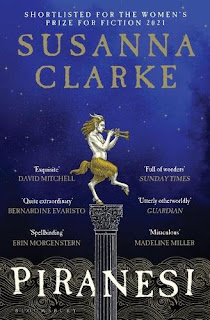
Piranesi, Susanna Clarke

This post contains affiliate links. If you click through and buy I will receive a percentage commission at no extra cost to you.

We meet Piranesi in the depths of a mythical feeling world, the House, in which his only companions are birds, statues, and the Other, a man he meets a couple of times a week but who doesn’t seem to know the surrounds as thoroughly as Piranesi. Indeed, he is the one who named him Piranesi, who knows it is not his real name but can’t remember what is. The Other also seems to have access to a lot more resources than Piranesi - using something that appears to be a smartphone or tablet, wearing quality clothes, and seemingly having provided a sleeping bag and fish fingers for one of the thirteen dead. Prianesi, on the other hand, satisfies himself with using seaweed to mend things and fishing for sustenance. Despite his meagre, solitary existence, Piranesi is largely quite content. He keeps a thorough journal and records data for the Other. He even creates a sort of religion for himself, looking after the remains of the dead and bringing them offerings. 

The opening fifty pages or so are quite baffling, with Piranesi’s way of keeping track of time and naming the halls being long and unwieldy (e.g. the eighteenth day of the fifth month in the year the albatross came to the south-western halls). Piranesi’s own obliviousness to the reality of his existence leaves the reader similarly unaware, but curious and constantly coming up with theories. As the story unfolds and things begin to become clearer both the reader and Piranesi start to uncover the truth. It is dark and unpleasant, but Piranesi manages to maintain an optimistic, caring outlook.

The Other seems intent on unsettling him, claiming that there is one more living in the House but that they wish them both harm, that if Piranesi so much as talks to them he will descend into madness. As much as the reader doesn’t know who the Other is or what his intentions are, you feel that he is not really looking out for Piranesi. He appears largely indifferent to him except when it comes to this person, nicknamed 16. Piranesi’s innocent trust in him can be difficult to read as he naively follows his instructions and makes it harder for himself to discover the truth.

The characters are interesting, and the drip feeding of information is tantalising. It puts you on an even footing with Piranesi - you are not given any information that doesn’t come to you through him, yet it is likely you’ll approach the events with a greater degree of suspicion. Piranesi is kind to a fault, continuing to try and protect those who have harmed him, although that might have more to do with Stockholm syndrome. His story examines the ways people cope with trauma and hardship, and his attachment to the House feels realistically drawn.

A book with an unreliable yet endearing narrator. Reading this will enter the reader into a strange and mind-bending world in which you will find yourself constantly questioning. Somewhat difficult to get in to, once it hooks you you won’t want to put it down.

Pick up a copy:
Bookshop
Waterstones

Friday, 22 April 2022

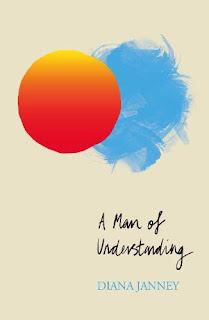
A Man of Understanding, Diana Janney

This post contains affiliate links. If you click through and buy I will receive a percentage commission at no extra cost to you.

This post is part of the blog tour for the book. Thanks to Random Things Tours and Cogito Publishing for providing me with a free copy of the book in exchange for an honest review.

When Rufus Ellerton’s parents are killed in a car accident he is sent to live in Mallorca with a grandfather (Granga) that he’s never met. One of the first things he does is rename Rufus Blue, and thus begins a relationship in which he constantly feels one step behind. Granga is philosophical and not used to opening up or being around children, and Blue feels the need to try and impress him. They soon fall in to a comfortable co-existence with secret hurts shared but not dwelt upon. When a new revelation shocks Blue to the core and he’s offered an alternative route, will the lessons they’ve learnt be enough to withstand the storm?

Blue is a thoughtful child who lacks confidence in himself but is keen to learn. He takes the complete upheaval of his life in his stride, but as he begins to feel more comfortable in himself and more aware of the ways sad events can change the course of a life he begins to connect more with his emotions. Contrary to what you might expect from a book on this topic, Blue’s loss and grief don’t feel like the heart of the novel, but rather a vehicle for the rest of the action.

Granga is a somewhat guarded character, keeping slightly distant and acting the role of teacher and guide. Him and Blue find a way to connect through poetry, although he continues to struggle to be open. Blue in his innocence often misunderstands situations and finds it hard to speak up for what he wants. Granga, on the other hand, has become disillusioned over time and lost the faith he once held. His emotions get stuck behind his sociable façade and it takes a lot for him to feel able to express himself.

Blue’s friend John Thompson helps to bridge the gap with his straightforward attitude and blunt honesty. Blue often finds himself wishing that he was able to speak as freely, to say the right thing to impress Granga as John seems to do so naturally. They all have their own cross to bear however. Their friendship is strong, built in the harsh environs of a school in which John was frequently bullied. In each other all three have the opportunity to learn something about themselves.

A gentle, slow paced read that considers love, loss, and what it means to be a family.


Monday, 18 April 2022

Dark Emu: Aboriginal Australia and the Birth of Agriculture, Bruce Pascoe

This post contains affiliate links. If you click through and buy I will receive a percentage commission at no extra cost to you.

Pascoe’s divisive re-assessment of pre-contact Aboriginal lifestyles looks at the ways in which they worked the land, and the horrifying deterioration of once prosperous land after the European colonists arrived. His source material largely derives from journals and reports by the colonists. These naturally contain a lot of bias, but Pascoe believes if we look beyond the colonial gaze we can see evidence of sophisticated agricultural systems. 

He writes of the evidence of harvesting practice and the storing of excess food. The colonists commented on the apparent presence of land that had been ploughed and rolled, with evidence of the tools that were used for the task. The farming of kangaroos is touched upon, alongside discussion of the sustainable way the land and animals were farmed. Pascoe speaks about the many examples of tools and other crafted items, such as clothes, rarely being displayed in museums, and the incorrect labels that are attached to them when they are. It seems that the prejudices of the past have filtered down to today, blinding us to the achievements of the Aboriginal people before the first colonists arrived.

His narrative is a painful reminder of the horrendous acts of those who went to Australia and claimed the land as their own, killing and destroying with seemingly no thought as to the lives they were taking and displacing. Indeed, Pascoe claims that one of the reasons there’s so little evidence of the villages and agricultural systems is that the destruction was so swift and complete that by the time the settlers arrived there was nothing left to suggest to them that a prosperous society existed before their arrival. 

Pascoe discusses the farming practices the Europeans brought to Australia which damaged the soil and made it far less productive. They did not try to learn from the Aboriginal people but instead attempted to replicate the type of farming they were used to. Pascoe believes this to have lasting implications for the Australian economy and its food production. Many native plants all but went extinct under the strain of these foreign farming techniques. Settlers were also reluctant to burn land as part of its management, which Pascoe argues has contributed to the prevalence of damaging wild bush fires today.

It is a convincing argument, and one that makes the reader re-consider the snippets of information we are taught about the Aboriginal people. However, it has received a lot of pushback, most notably in Peter Sutton and Keryn Walshe’s Farmers or Hunter-Gatherers? The Dark Emu Debate in which they argue that being a hunter-gatherer is not something to be looked down upon. Hunter-gatherers do not wander the landscape aimlessly but rather know which areas provide what they need at different times of the year, travelling accordingly. They believe Pascoe’s argument attempts to make the Aboriginal people appear more European, which is not a positive strategy for re-assessing a difficult history. They take issue with his focus on colonial sources and lack of interaction with knowledge keepers in Aboriginal communities. Not only could the sources be more diverse, but they also point to a number of examples where he doesn’t include full quotes, ignoring passages that don’t fit neatly with his narrative.

This is a thoroughly fascinating and accessible read that encourages the reader to consider their assumptions. It discusses the ways in which Western ideas of civilisation have been perpetuated to excuse past actions around the world, giving us food for thought on the lens through which we form our opinions. Worth reading, but equally valuable to look into the counter-arguments and problems with Pascoe’s approach.

Saturday, 9 April 2022

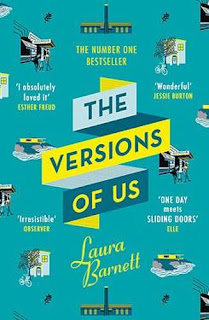
The Versions of Us, Laura Barnett

This post contains affiliate links. If you click through and buy I will receive a percentage commission at no extra cost to you.

Autumn in Cambridge, 1958, and a little dog is about have a big impact on Eva’s life. Innocently cycling to meet her boyfriend David, the dog variously causes her to fall off, get a puncture, or cycle on as planned. Jim happens to be walking by and offers help in two of the versions. Neither of their lives will ever be quite the same again. What follows is three versions of their lives, spanning almost sixty years, with all the ups and downs that a life contains.

Eva is an aspiring author, Jim a painter, and David an actor. We see their varying degrees of success and the impact it has on their relationships. How creatively successful can you be while committing fully to a relationship? Can both parties be permitted the freedom to achieve simultaneously, or must one always be sacrificed for the elevation of the other? These are questions that are explored in the book alongside a certain sense of fate - no matter the circumstances some things never change.

Jim’s father was an artist and Jim lives in the shadow of his fame. He cheated on Jim’s mother, Vivian, and there’s also a sense of trying to go against the grain of his genes. Unfortunately, many versions of their lives and relationships include infidelity. This is a book that shows the realities of long-term relationships - the mundanity and expectations, as well as the more dramatic moments. If you’re looking for a happy, rose tinted romance this may not be the one for you.

Eva is fairly consistent in all versions. Accomplished and caring, she does at times allow her partner’s desires and ambition to overshadow her own. She proves herself loyal and with a strong moral compass time and again, but is not without her moments of weakness. David, on the other hand, rarely comes off well. Self-obsessed and vain, he fulfils his father-in-law’s fear that he will never love Eva as much as he loves himself. He has his moments however, and is not a spiteful character. He is destined to be a secondary character to the love between Eva and Jim. Their lives seem to be drawn together, even when they know each other only distantly, there is a fascination there. There is a sense that they are meant to be together, whatever flaws the relationship might reveal in them.

The story's structure is interesting, and although it has the potential to be somewhat confusing it is largely possibly to keep track of each of the versions (although this becomes more difficult as relationships break down and start up, the same characters populating each version). There are little moments that stay the same in each, but with drastically different consequences in the varying circumstances. This felt like a nice touch, and highlights the many moments where our lives have the opportunity to diverge.

Of the side characters, Vivian is the one that is most memorable. With a mental illness that weighs on Jim’s conscience, and a strong desire for him to avoid following in his father’s footsteps, she is a strong, controlling force in his life. Eva’s parents are kind and attentive, and as a result blend more easily into the background. The passing of the older generation is sensitively and powerfully handled.

The scale of the novel means that there’s bound to be an age or circumstance that particularly resonates with readers of all ages. Whether reflective of your life or not, it is quite unputdownable and will leave you constantly wanting to read on. There are moments of great joy and others of bitter heartbreak. Characters will betray those most devoted to them and sabotage their own happiness, yet at the centre is the constant connection between Eva and Jim. At times frustratingly oblivious or stubborn, you root for them through thick and thin. A book that will make you laugh and cry, absolutely worth your time.

Wednesday, 16 March 2022

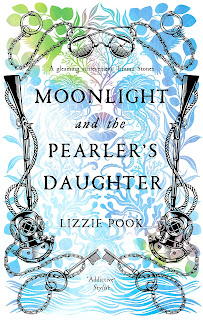
Moonlight and the Pearler’s Daughter, Lizzie Pook

This post contains affiliate links. If you click through and buy I will receive a percentage commission at no extra cost to you.

This post is part of the blog tour for the book. Thank you to Mantle and Random Things Tours for providing me with a copy of the book in exchange for an honest review.

The year is 1886 and the Brightwell family arrive in Bannin Bay, Western Australia, from England. Eliza remarks on the harshness of the land and how very different it is to anything she’s ever experienced before. Her father becomes a successful pearler and the family financially secure. Ten years later however, and we meet Eliza again, alone and waiting for her father to return from an expedition. Instead, she receives news of his disappearance. Before long Balarri, a local Aboriginal man, is arrested for his murder and the police are keen to close the case. Eliza is convinced they are wrong, both about her father being dead, and about Balarri being involved in his disappearance. She is determined to find the truth, and hopes desperately to be reunited with her father. 

The action moves along swiftly in the novel, hooking you in early on. So much happens in the book - tales of grief, shipwreck, drug addiction, and elicit affairs, and yet somehow they pass over you without any lasting effect. The moment of revelation or peril at times captures your heart yet the story moves on at such a pace that there’s no time to absorb what you’ve just read before the next misadventure is in full swing. Many readers might enjoy this fast pace but for me it left me feeling detached from the action and made it a book that was easy to put down. 

The writing, however, is beautifully constructed, with vivid descriptions of the landscape that make you feel as though you’re there. Pook is certainly a fan of similes and at times they feel a little repetitive, but there are also many moments of searing reality in her descriptive choices. 

Pook discusses many topics including the role of women, especially one alone in a dangerous place at a time when women were restricted by their gender. Eliza is headstrong and courageous to a fault, but she reluctantly admits that she needs a male companion to allow her access to certain areas. Axel is a willing companion, and although his presence may be necessary it is Eliza who leads the way and makes some reckless, dangerous decisions. Along the way she meets other women making their own way, at times attempting to live the life of a man. Again, this is passed over so quickly that it barely felt worth including. Alongside the struggles of women is the even more dangerous position of the Aboriginal people. We see from an early stage in the book how they are mistreated and considered guilty without any evidence. Later in Eliza’s travels she witnesses even more so the mistreatment of the original inhabitants of the land and it makes her reflect on her own position there, on the land her family’s bungalow sits on.

Another major theme throughout is family and grief. Eliza has suffered many losses in her young life, and the further disintegration that threatens her family throughout is almost too much to bear. There are moments of real trauma in the flashbacks to the loss of her mother, of the grief of her father and how Eliza experienced the events as a child. This helps to explain her determination to find her father, her need to see for herself what has happened to him. 

This is an interesting, if sometimes predictable read. It feels at times like it’s working to a formula with very familiar story arcs. The conclusion was a surprise, but the characters involved hadn’t made enough of an impression earlier to leave much of an emotional blow. There are short passages interspersed throughout the main text of Brightwell’s diary and an account of someone on the run that keep you guessing how they’re going to interact with the main plot. If you enjoy a mystery with a strong female lead and a brilliant sense of place then this is the book for you.

Pick up a copy:
Bookshop
Foyles
Waterstones


Tuesday, 1 March 2022

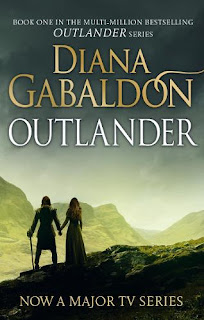
Outlander, Diana Gabaldon

This post contains affiliate links. If you click through and buy I will receive a percentage commission at no extra cost to you.

It’s 1946 and Claire Randall is in Inverness with her husband Frank, reconnecting after a long separation due to the Second World War. Their days are filled with exploring the Scottish Highlands, Frank’s genealogical research, and time getting re-acquainted with each other. One day, however, Claire returns to a circle of standing stones they’d come across on one of their outings and before she knows it she’s passed through one of them and landed in 1743. Here she meets Black Jack Randall, one of her husband’s ancestors, but without any of the gentleness of his descendant. She’s soon whisked away by a group of Highlanders and becomes their captive while they try to work out if she’s an English spy, or threat in another way. During this time she desperately tries to find a way to escape and get back to the stones and Frank. It soon becomes apparent that this will be no easy feat, and that there are many barriers between her and the stones, not least her own heart.

She is naturally disoriented and confused when she first arrives, not understanding what has happened. Once she’s accepted that she has travelled through time she keeps it together as much as possible, but it’s not easy. She is distraught to have been separated from Frank and desperately worried about how he will be coping with her mysterious disappearance. Her medical ability and the openness of the Highlanders to let her heal them helps to ground her, reminding her that these are real people, and giving her a sense of herself. She is not mistreated but she is nonetheless a prisoner, and one that is approached with suspicion. She uses techniques that Frank has told her about from his experiences during the war - when under interrogation to tell the truth as far as possible. His interest in history also proves useful as it provides Claire not just with information that helps her fit in to the time more easily, but also some privileged knowledge which she is able to use as a bargaining tool. Of course, there’s also the difficult position of knowing how history is going to pan out without being able to help change it.

Despite her knowledge there are still many times when her modern views put her and others in danger. Her use of language is frequently in contrast to other women of the time, but it is her inability to stomach some of the cruelties and injustices of the time which cause the most problems. Her response to witnessing physical punishments remind us that although we know about these things happening in the past it is an entirely different experience witnessing them first hand. She also reflects on her own time, on the blame placed on normal German citizens, and how unfair this is when faced with a mob. She is ashamed to discover that self preservation kicks in ahead of saving others.

Luckily for Claire, Jamie Fraser, the hero of the series, is frequently on hand to help not just her, but others in a sticky situation. There are times, however, when he becomes frustrated with Claire, as the reader does, for constantly ignoring those who know the time better, and putting others at great risk as a result. Claire is by no means a damsel in distress, more than willing to stick up for herself, and indeed to kill, but Jamie is often needed to save the day in the typical heroic fashion. At times you’ll find yourself rolling your eyes at how deeply embedded certain topes are, but this does not take away from the enjoyment of the story.

Jamie’s initial introduction, however, is understated - he is a regular Highlander, injured and unassuming. His thoughtfulness and care are built up over time as Claire sees more of his interactions with others, as well as developing an easy rapport with him herself. She feels safe with him, and he promises from the off to protect her. He is clearly a moral man who cares about others, but it is their wedding that will make the reader fall for him. It is a marriage of convenience but he looks after the little details to try and make it special for her. His innocence on their wedding night is endearing and a nice inversion of what we have come to expect from such stories. Criticism has sometimes been directed at the series for the anachronistic modernism of Jamie’s character, but in this first book we see some less appealing aspects that would be more in keeping with the time. He strongly believes in her duty to obey him, a fact that Claire pushes back against. He also beats her as punishment for disobeying, and there are some sex scenes between them which feel uncomfortably close to assault. Even at gentler times she acknowledges that saying no is not an option. 

Despite certain misgivings, both Claire and the reader feel fondly toward Jamie, and as they grow closer she becomes consumed with guilt. She can’t reconcile having married another man, but also feels the cruelty of planning to leave Jamie, who is clearly quite infatuated with her, without warning or explanation. When she finally has the chance to leave she must make a heartbreaking decision as to which man she can’t live without. This is a pivotal, emotional moment, and one that demonstrates the depth of feeling that has developed between the newlyweds.

This is an enjoyable, addictive read. There are many moments of humour throughout and a wonderful host of characters. Gabaldon is careful to remind the reader of Frank when they’re at risk of getting too swept up in the love story of Claire and Jamie. Black Jack Randall provides an unwelcome reminder of her first husband - she often comments on their similarities and the expressions that in one evokes love and in the other horror. This is a clever addition and makes you wonder if Claire would be able to put the memory of him to one side if she were able to get back to Frank. This book should come with a trigger warning for sexual assault as it is alluded to throughout and described in realistic, upsetting detail. At times it feels as though the threat of rape is exaggerated, with all the men seemingly a danger after a few drinks, but the most disturbing incident is dealt with well. It does not feel gratuitous and the emotional consequences are considered quite deeply. 

The book doesn’t shy away from difficult events, and although Gabaldon admits to the history knowingly being incorrect at times, it doesn’t cause a block for readers. There are some sections that drag a little but mostly it is hard to put down. There is love, heartbreak, peril and adventure that will be plenty to keep most readers entertained. If you enjoy books that stir up the emotions this is certainly one for you, and the good news is there’s another eight books to enjoy after this one.